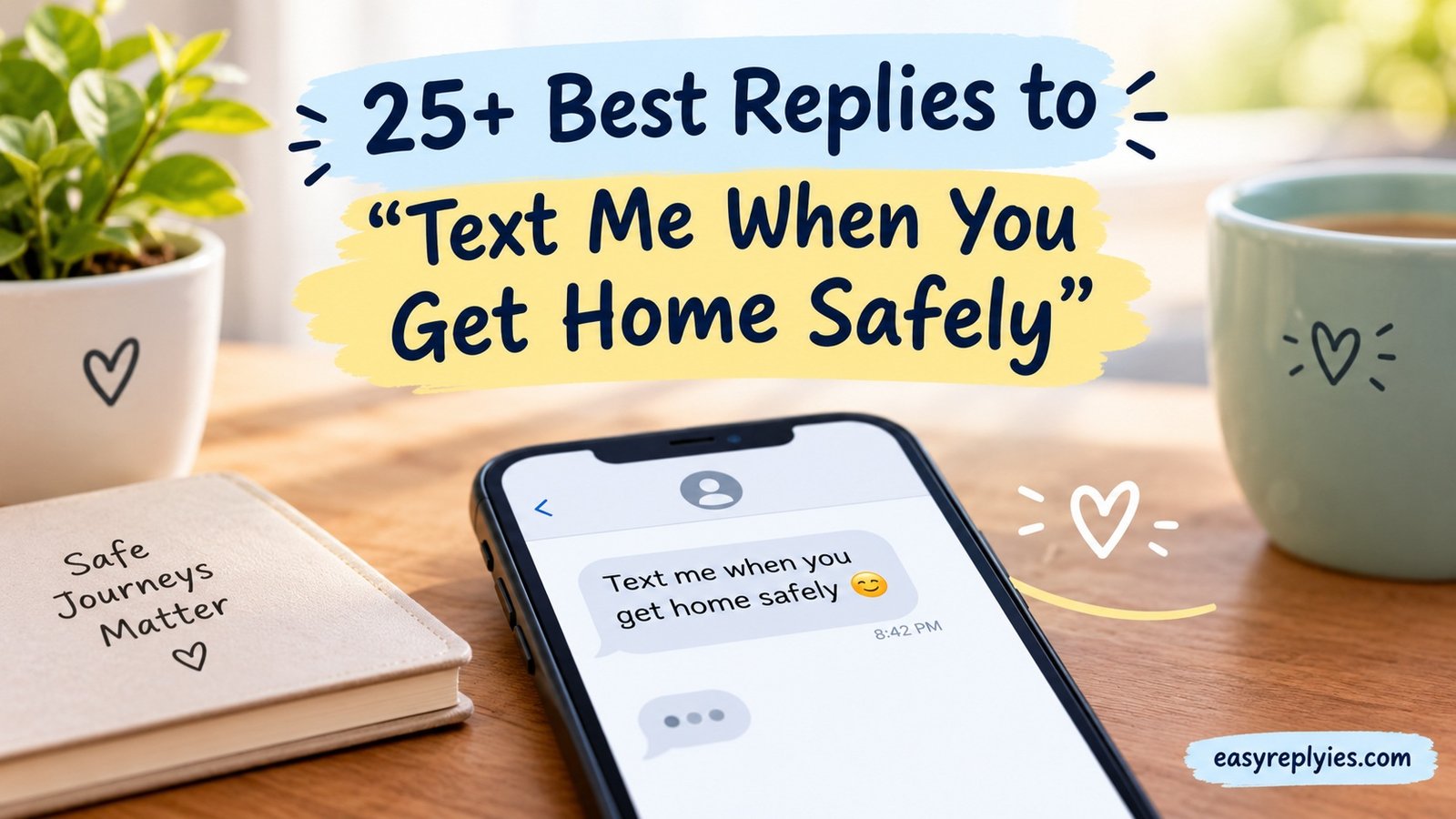
Best Replies to “Text Me When You Get Home Safely” That Sound Natural can show genuine concern, care, and appreciation without feeling overly formal.
When a friend, parent, coworker, family member, partner, or crush sends this message, a thoughtful reply can reassure them while acknowledging their affection and protectiveness. Simple options like I will, thanks for caring, I’ll let you know when I’m home, Absolutely, I’ll keep you posted, or You got it feel natural and work for a late night, event, date, or hangout. A safety check can become a warm moment, especially when someone is invested in you and wants to know that you made it home without any trouble. Top alternatives can also work in a DM, group chat, or regular text, depending on the relationship, mood, and conversation.
For a quietly sweet response, you might say care about you, let me know, or okay, while a flirty or funny response can help keep things light and make them laugh. If someone has a special place in your life, an appreciative, casual, cute, or sweet reply can show attention without making the emotion feel forced. The right response depends on every situation, so you can be playful, confident, or simply realistic. Replying when you get home safely is also a practical safety reminder that shows care and can strengthen a connection, keeping the conversation flowing naturally instead of ending awkwardly.
1. “I Will, Thanks for Caring”
This is one of the safest responses because it acknowledges both parts of the message: the request and the concern behind it. It sounds appreciative without becoming overly emotional. Use it when you want to be warm and respectful but don’t necessarily want to turn the conversation into something more serious.
Meaning
You are saying that you heard them and appreciate their concern.
Tone
Polite, warm, appreciative, and sincere.
Example
Friend: Text me when you get home safely.
You: I will, thanks for caring.
Best Use
This works especially well with friends, family members, coworkers, or acquaintances who are looking out for you.
2. “Of Course. I’ll Let You Know When I’m Home.”
Sometimes the most natural response is simply to reassure the other person. This answer is straightforward and removes any uncertainty about whether you will follow up.
Meaning
You are agreeing to keep them updated once you arrive.
Tone
Calm, reassuring, and friendly.
Example
Sister: Text me when you get home safely.
You: Of course. I’ll let you know when I’m home.
Best Use
Use this for family, close friends, or anyone who genuinely wants confirmation that you arrived safely.
3. “Deal. You’ll Get the ‘I’m Home’ Text.”
Adding a little personality makes a routine promise feel more conversational. This response is particularly natural if the person already knows you well.
Meaning
You are playfully confirming that they can expect a message from you.
Tone
Casual, playful, and reassuring.
Example
Friend: Text me when you get home safely.
You: Deal. You’ll get the “I’m home” text.
Best Use
Great for friends and casual conversations where a relaxed tone feels appropriate.
4. “Absolutely. I’ll Keep You Posted.”
This reply sounds considerate without being too sentimental. It works especially well when someone has a genuine reason to be concerned about your journey.
Meaning
You are promising to communicate with them and keep them informed.
Tone
Responsible, polite, and reassuring.
Example
Coworker: It’s getting late. Text me when you get home safely.
You: Absolutely. I’ll keep you posted.
Best Use
Useful for coworkers, friends, neighbors, and other situations where you want to remain courteous.
5. “Will Do 😊”
Short messages often work best when the original message is simple. The emoji adds warmth without requiring a long explanation.
Meaning
You are agreeing to do exactly what they asked.
Tone
Friendly, casual, and warm.
Example
Friend: Text me when you get home safely.
You: Will do 😊
Best Use
Ideal for texting, casual friendships, family chats, and everyday conversations.
Quick tip: If the other person is being particularly serious or worried, skip the emoji and give them a more reassuring answer.
6. “I’ll Text You—Promise.”
The word “promise” gives the response a little more emotional weight. It can reassure someone who clearly cares about your safety.
Meaning
You are emphasizing that you intend to follow through.
Tone
Reassuring, affectionate, and sincere.
Example
Partner: Please text me when you get home safely.
You: I’ll text you—promise.
Best Use
Best for partners, close friends, siblings, or family members.
7. “Aww, You’re Sweet. I Will.”
Sometimes the most important part of the message isn’t the request—it’s the fact that someone cared enough to make it. This reply acknowledges that affection directly.
Meaning
You appreciate their concern and find it sweet.
Tone
Warm, affectionate, and slightly playful.
Example
Them: Text me when you get home safely.
You: Aww, you’re sweet. I will.
Best Use
Works particularly well in dating, romantic, or close personal conversations.
8. “Don’t Worry, I’ve Got You.”
This response turns the reassurance around. Instead of simply saying you’ll text, you’re telling the person that they don’t need to worry.
Meaning
You are reassuring them that everything is under control.
Tone
Confident, caring, and reassuring.
Example
Friend: Text me when you get home safely.
You: Don’t worry, I’ve got you.
Best Use
A good choice for close friends, partners, and people with whom you already have an emotionally comfortable relationship.
9. “Only If You Promise Not to Panic Before Then 😂”
If the conversation is lighthearted, a little humor can make your reply memorable. This works because the joke exaggerates the other person’s concern rather than dismissing it.
Meaning
You are playfully suggesting that they might worry while waiting for your message.
Tone
Funny, playful, and teasing.
Example
Friend: Text me when you get home safely.
You: Only if you promise not to panic before then 😂
Best Use
Best for close friends or someone who enjoys teasing.
Watch the tone: Avoid this if the person is genuinely worried about your safety. Humor can come across as dismissive when the concern is serious.
10. “I’ll Send Proof of Life When I Arrive.”
This is a deliberately dramatic way to say you’ll send a quick arrival message. The humor comes from treating a simple “I’m home” text like an official status report.
Meaning
You are jokingly promising to confirm that you arrived safely.
Tone
Witty, sarcastic, and playful.
Example
Friend: Text me when you get home safely.
You: I’ll send proof of life when I arrive.
Best Use
Perfect for friends who appreciate dry humor or exaggerated jokes.
11. “Home Safe = Immediate Text. Got It.”
This response is short but reassuring. It makes the follow-up sound like a clear priority rather than something you might forget.
Meaning
You understand the request and intend to act on it.
Tone
Direct, confident, and reassuring.
Example
Dad: Text me when you get home safely.
You: Home safe = immediate text. Got it.
Best Use
Works well with parents, family members, friends, or anyone who wants a clear confirmation.
12. “I Will. You Do the Same.”
Sometimes the person reminding you to stay safe may also be traveling. Returning the concern makes your answer feel mutual rather than one-sided.
Meaning
You appreciate their concern and want them to take care of themselves too.
Tone
Caring, thoughtful, and mutual.
Example
Friend: Text me when you get home safely.
You: I will. You do the same.
Best Use
A natural choice when both of you are heading home or traveling separately.
13. “You’ll Be the First to Know.”
This adds a little affection to an otherwise ordinary promise. Depending on the relationship, it can sound sweet or subtly flirty.
Meaning
You are emphasizing that you intend to tell them as soon as you arrive.
Tone
Warm, affectionate, and slightly playful.
Example
Them: Text me when you get home safely.
You: You’ll be the first to know.
Best Use
Especially suitable for someone you are dating or someone you’re emotionally close to.
14. “I’ll Text You. Can’t Have You Worrying About Me.”
This answer shows that you understand their concern while keeping the exchange relaxed. It works particularly well when someone tends to worry about you.
Meaning
You recognize that they care and don’t want them to be unnecessarily concerned.
Tone
Caring, casual, and reassuring.
Example
Friend: Text me when you get home safely.
You: I’ll text you. Can’t have you worrying about me.
Best Use
Good for close friends, family, and romantic relationships.
15. “Definitely. I Appreciate You Looking Out for Me.”
This is more heartfelt than a simple “okay.” It recognizes the emotional intention behind the message and communicates genuine gratitude.
Meaning
You are thanking the person for being considerate and protective.
Tone
Sincere, respectful, and appreciative.
Example
Friend: Text me when you get home safely.
You: Definitely. I appreciate you looking out for me.
Best Use
Excellent when someone has gone out of their way to make sure you’re okay.
16. “If I Forget, You Have Permission to Call Me Out.”
This is a playful way to acknowledge that you sometimes forget to send updates. It works because you are taking responsibility while keeping the mood light.
Meaning
You are promising to text but jokingly admitting that you might need a reminder.
Tone
Funny, casual, and self-aware.
Example
Friend: Text me when you get home safely.
You: If I forget, you have permission to call me out.
Best Use
Best for friends and people who are comfortable joking with you.
17. “Made It Home Safe ❤️”
If you’re replying after you have already arrived, you don’t need to explain anything. This simple message gives the person exactly the information they wanted.
Meaning
You are confirming that you arrived safely.
Tone
Warm, simple, and affectionate.
Example
Them: Text me when you get home safely.
You: Made it home safe ❤️
Best Use
Ideal for partners, close friends, family, and late-night conversations.
Read More:25 Best Responses to “What Turns You On?”
18. “I’m Home. Happy Now?”
A little teasing can work when you know the other person was anxiously waiting for your message. The phrase is playful, but it should be used only when your relationship can handle that kind of humor.
Meaning
You are confirming your safe arrival while lightly teasing them for worrying.
Tone
Teasing, playful, and casual.
Example
Friend: Text me when you get home safely.
You: I’m home. Happy now?
Best Use
Great for close friends, siblings, or partners with a playful dynamic.
Better choice: If the person was genuinely anxious, say something warmer such as “I’m home safe. Thanks for checking on me.”
19. “I Will. You’re Not Getting Rid of Me That Easily.”
This turns a safety check into a playful reassurance. It can sound especially charming in a romantic conversation.
Meaning
You are reassuring the person while joking about being around for a long time.
Tone
Playful, affectionate, and flirty.
Example
Them: Text me when you get home safely.
You: I will. You’re not getting rid of me that easily.
Best Use
Best suited to dating or romantic conversations, rather than formal or professional relationships.
20. “Yes, Mom 😂”
When a close friend or partner gives you a protective reminder, pretending they’re acting like your parent can create an easy joke.
Meaning
You are teasing them for being protective.
Tone
Funny, sarcastic, and affectionate.
Example
Friend: Text me when you get home safely.
You: Yes, Mom 😂
Best Use
Works with close friends and family, especially when playful teasing is already normal between you.
Watch the tone: Don’t use it with someone you barely know, because it could sound disrespectful rather than funny.
21. “I’ll Text You the Second I Walk Through the Door.”
This is more specific than simply saying “I will.” It paints a clear picture that you’ll message immediately after arriving.
Meaning
You are making a clear commitment to update them.
Tone
Thoughtful, reassuring, and sincere.
Example
Partner: Text me when you get home safely.
You: I’ll text you the second I walk through the door.
Best Use
A strong choice for partners, family members, or someone who is genuinely concerned about your journey.
22. “Absolutely. Safety First.”
This is concise and mature. It acknowledges that their request is reasonable without adding unnecessary emotion.
Meaning
You agree that getting home safely is the priority.
Tone
Direct, responsible, and polite.
Example
Coworker: Text me when you get home safely.
You: Absolutely. Safety first.
Best Use
Useful for coworkers, acquaintances, group outings, and situations where you want to remain friendly but professional.
23. “I’ll Let You Know. Thanks for Being Thoughtful.”
This strikes a good balance between warmth and politeness. It is especially useful when you want to show appreciation without sounding overly familiar.
Meaning
You are accepting their concern and thanking them for it.
Tone
Polite, considerate, and warm.
Example
Neighbor: Text me when you get home safely.
You: I’ll let you know. Thanks for being thoughtful.
Best Use
Suitable for neighbors, acquaintances, coworkers, friends, and other respectful relationships.
24. “Already Planning My ‘Made It Home’ Text.”
This response adds personality without becoming overly sentimental. It suggests that you intend to follow through while keeping the conversation casual.
Meaning
You are reassuring them that their request is already on your mind.
Tone
Light, confident, and playful.
Example
Friend: Text me when you get home safely.
You: Already planning my “made it home” text.
Best Use
Great for casual texting and friendly conversations.
25. “I’ll Text You When I’m Home. Until Then, Try Not to Worry Too Much.”
This is a gentle closing response that combines reassurance with a little humor. It recognizes that the other person cares without making fun of them too heavily.
Meaning
You promise to check in and encourage them to relax while they wait.
Tone
Caring, reassuring, and lightly playful.
Example
Them: Text me when you get home safely.
You: I’ll text you when I’m home. Until then, try not to worry too much.
Best Use
Works well with close friends, family members, or romantic partners.
How to Choose the Right Reply
The best response isn’t necessarily the funniest or sweetest one. It is the one that matches your relationship with the person and the reason they asked you to check in.
If someone is simply being polite, a short response such as “Will do, thanks!” is enough. If they are genuinely worried, give them stronger reassurance. And if the person is someone you’re dating, you can add warmth or flirtation if that already matches the dynamic between you.
A useful rule is to match their emotional energy. Don’t answer a serious safety concern with sarcasm unless you know the person will appreciate it. Likewise, you don’t need to write a heartfelt paragraph when a simple “I will ❤️” naturally fits the conversation.
Short Replies to “Text Me When You Get Home Safely”
Sometimes you don’t need a clever comeback. A short answer is faster, clearer, and more natural in everyday texting.
Meaning
These replies simply confirm that you’ve heard the request and will follow through.
Tone
Casual, direct, and friendly.
Examples
- “Will do!”
- “Of course.”
- “I will 😊”
- “Absolutely.”
- “You got it.”
- “Definitely.”
- “No worries.”
- “I’ll let you know.”
- “For sure.”
- “Got it!”
Best Use
Use these for quick texts, busy moments, friends, family, or casual conversations.
Sweet Replies for Someone You Care About
When the person saying this is someone important to you, you may want your answer to acknowledge the care behind their words rather than simply agreeing.
Meaning
These responses show that their concern means something to you.
Tone
Affectionate, sincere, and warm.
Examples
- “I will. Thanks for caring about me.”
- “Of course. That’s really sweet of you.”
- “I’ll text you as soon as I’m home ❤️”
- “I appreciate you looking out for me.”
- “I will. It’s nice knowing you care.”
- “Absolutely. I’ll make sure you know I’m home safe.”
Best Use
These work particularly well with partners, close friends, siblings, and family members.
Funny Responses for Close Friends
A friend who knows your sense of humor may appreciate something more entertaining than a basic “okay.” The safest jokes are ones that acknowledge their concern rather than mocking it.
Meaning
You are accepting their request while adding some personality.
Tone
Funny, teasing, and relaxed.
Examples
- “Yes, Mom 😂”
- “Copy that, safety officer.”
- “I’ll report back from base camp.”
- “Understood. Mission: Get Home Alive.”
- “You’ll receive the official arrival notification.”
- “Fine, fine. I’ll provide the required proof of life.”
- “I’ll text before you send out the search party.”
Best Use
Use these with close friends, siblings, or people who already understand your humor.
Watch the tone: Don’t use jokes about danger when the person has a serious reason to be concerned.
Flirty Replies When Someone You Like Says It
A request to text when you get home can sometimes be a simple act of care, but it can also create an opportunity for a little playful affection. Keep the flirtation proportional to the relationship.
Meaning
You are accepting their concern while subtly showing that you enjoy the attention.
Tone
Playful, affectionate, and flirty.
Examples
- “I will. I like knowing you’re thinking about me.”
- “You’ll definitely get that text.”
- “Only because you asked so nicely.”
- “I’ll text you. Wouldn’t want you missing me.”
- “Of course. You’ll be the first to know.”
- “I will. Apparently, someone’s keeping tabs on me.”
Best Use
Best for dating, romantic conversations, or an established flirtatious connection.
Better choice: If you’re unsure whether the other person is flirting, choose a warm but neutral response rather than assuming romantic intent.
Polite Replies for Coworkers and Acquaintances
A coworker, neighbor, client, or casual acquaintance may say this because you are leaving late or traveling after an event. In these cases, friendliness is appropriate, but overly intimate language may feel out of place.
Meaning
You are acknowledging their concern respectfully.
Tone
Professional, courteous, and appreciative.
Examples
- “Absolutely, I’ll let you know.”
- “Thanks, I will.”
- “Of course. I appreciate that.”
- “Will do. Have a good evening.”
- “Definitely. Thanks for checking in.”
- “I’ll send a quick message once I’m home.”
Best Use
These are appropriate for workplace conversations, professional relationships, neighbors, and acquaintances.
When Want to Reassure Someone Who Is Worried
Sometimes “text me when you get home safely” isn’t casual at all. The person may be worried because you’re traveling late, driving a long distance, dealing with bad weather, or returning from an unfamiliar place. In that situation, clarity matters more than cleverness.
Meaning
The goal is to reduce uncertainty and let the person know you’ll communicate.
Tone
Calm, responsible, and reassuring.
Examples
- “I will. I’ll message you as soon as I get there.”
- “Absolutely. I’ll make sure you know when I’m home.”
- “Don’t worry, I’ll keep you updated.”
- “I’ll text you once I’m safely inside.”
- “Of course. I know you’re concerned, so I’ll let you know.”
Best Use
Use these when someone is genuinely anxious or has a reasonable reason to worry.
When You Forgot to Text Them
If you arrived home and forgot to send the promised message, don’t overcomplicate the explanation. A quick acknowledgment is usually better than pretending you didn’t forget.
Meaning
You are taking responsibility and reassuring them that you’re safe.
Tone
Honest, casual, and apologetic.
Examples
- “Sorry, I completely forgot to text. I’m home safe!”
- “Made it home! Sorry I forgot to let you know.”
- “I’m home safe—my bad for forgetting to text.”
- “Just realized I never messaged you. I’m home!”
- “Sorry for the late update. I made it home safely.”
Best Use
These responses work for friends, family, partners, and anyone who was waiting for confirmation.
Quick tip: If someone was genuinely worried, apologize briefly rather than making a joke about their concern.
If You Want to Turn the Conversation Into a Longer Chat
A simple safety check doesn’t have to end the conversation. If you want to keep talking, answer their request and add a natural question or comment.
Meaning
You are confirming that you’ll be safe while also showing that you’re interested in continuing the conversation.
Tone
Friendly, engaged, and conversational.
Example
Them: Text me when you get home safely.
You: I will! And when I get home, you better tell me how the rest of your evening went.
Best Use
This is useful when you’re close to the person, interested in them, or simply want to keep the conversation going.
What Not to Say
Not every technically correct response is a good conversational response. A few answers can accidentally make the other person feel dismissed.
Meaning
The goal is to avoid turning someone’s genuine concern into an uncomfortable exchange.
Tone
The issue here is less about a particular tone and more about respecting the situation.
Examples to Use Carefully
- “Why do you care?”
- “Relax, I’m not a child.”
- “Stop worrying.”
- “Whatever.”
- “You’re being dramatic.”
- “I can take care of myself.”
Best Use
These aren’t generally good choices when someone is expressing genuine concern. If you don’t want frequent check-ins, communicate that boundary calmly instead of insulting the person.
For example:
You: “I appreciate you checking on me. I’ll let you know when I get home, but you don’t need to worry if I take a little while to reply.”
That preserves the relationship while making your preference clear.
How to Make Your Reply Sound More Natural
The most natural text responses usually have one thing in common: they sound like something you would actually say. You don’t need an elaborate sentence just because someone else sent a thoughtful message.
Consider three things before replying:
- Who said it? A partner may deserve a warmer response than a coworker.
- Why did they say it? A casual reminder and a serious safety concern call for different tones.
- What is your normal communication style? If you usually send short texts, don’t suddenly write a dramatic paragraph.
For example, if your normal style is casual, “Will do 😊” may sound much more genuine than “I sincerely appreciate your concern regarding my safe arrival.”
The goal isn’t to find the fanciest response. It’s to find one that fits the relationship and sounds like you.
Frequently Asked Questions
What is the best response to “Text me when you get home safely”?
A simple “Of course, I will. Thanks for caring” is a strong all-purpose response. If the person is close to you, you can make it warmer or more playful depending on your relationship.
How can I give a polite response?
Keep it brief and appreciative. Try “Absolutely, I’ll let you know. Thanks for checking in.” This works well when you want to be friendly without sounding overly familiar.
What is a funny response I can use?
If you’re talking to a close friend, you could say “Yes, Mom 😂” or “I’ll provide the official proof-of-life update.” Use humor only when it fits your existing dynamic.
What should I say if someone I like tells me to text them when I get home?
A warm, slightly flirty response can work if there is already mutual interest. For example: “I will. I like knowing you care.” If you’re unsure about their intentions, keep your reply friendly rather than overly flirtatious.
Should I keep my reply short?
Usually, yes. The original message is often a simple safety request, so a short answer such as “Will do!” is perfectly natural. Add more only if you want to express appreciation or continue the conversation.
How do I know which response fits the situation?
Look at the relationship, emotional tone, and reason for the message. Use a polite reply with acquaintances, a reassuring answer with worried family members, a funny response with close friends, and a flirty one only when romantic interest is already part of the conversation.
Conclusion
A message like “Text me when you get home safely” is usually more than a simple request—it can be a small way of saying, “I care about you.” Your response doesn’t need to be complicated. A quick “Will do,” a sincere “Thanks for caring,” or a playful “Yes, Mom 😂” can all work when matched to the right situation.
The key is to match the person’s tone and your relationship with them. If they’re genuinely worried, prioritize reassurance. If you’re joking with a close friend, have fun with it. And if the message comes from someone you like, a little warmth can go a long way. Choose the response that feels natural coming from you.









1 thought on “25 Best Replies to “Text Me When You Get Home Safely””