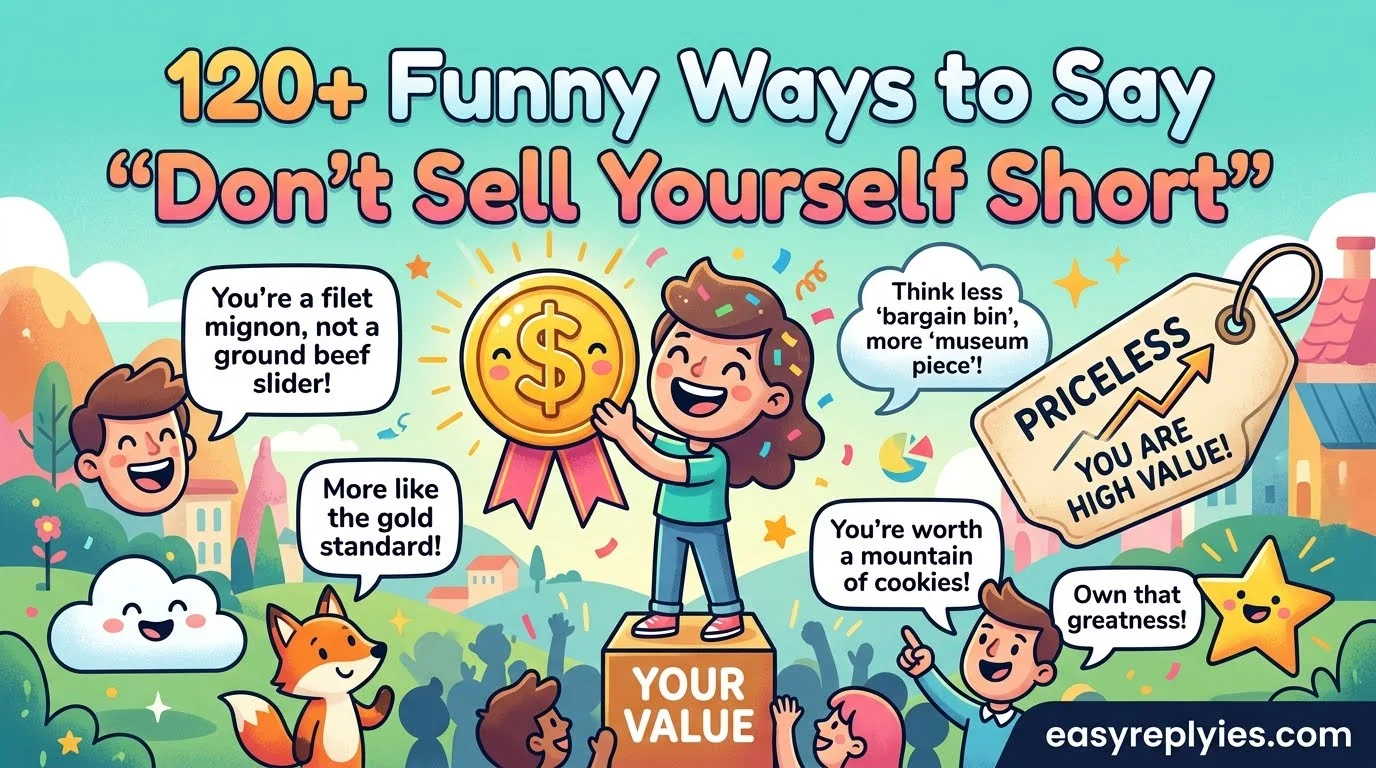
“Don’t Sell Yourself Short” is a powerful reminder not to underestimate your abilities, experience, or potential. When someone tells you not to sell yourself short, they are encouraging you to recognize your own value and give yourself proper credit. Sometimes, we focus so much on our mistakes or weaknesses that we forget how much we have already achieved. This phrase encourages a more confident and positive way of looking at yourself.
People often sell themselves short when they doubt their skills, compare themselves with others, or assume they are not good enough for an opportunity. For example, you might avoid applying for a job because you think other candidates are more qualified, or stay quiet because you believe your ideas are not important. In these situations, remembering “Don’t Sell Yourself Short” can help you step beyond self-doubt and recognize what you can actually accomplish.
Understanding this phrase is also about building self-confidence and self-belief. It does not mean pretending to be perfect or exaggerating your abilities. Instead, it means being honest about your strengths and giving yourself a fair chance to succeed. Whether you are talking about work, relationships, education, or personal goals, don’t sell yourself short is a simple but meaningful reminder to believe in your potential and value.
1. “I’m Not Selling Myself Short, I’m Just Running a Clearance Sale”
This response turns the phrase into a silly business joke. It works particularly well when someone is encouraging you and you want to acknowledge them without becoming overly serious.
Meaning
You are joking that you may be undervaluing yourself, but you are fully aware of the situation.
Tone
Funny, playful, self-aware.
Example
Friend: You could definitely do better than that. Don’t sell yourself short.
You: I’m not selling myself short. I’m just running a clearance sale.
Best Use
Use this with friends or people who already understand your sense of humor. It is especially natural in casual texting.
2. “Relax, I’m Just Giving Everyone Else a Chance”
Sometimes confidence is funnier when you pretend you are deliberately holding yourself back.
Meaning
You are jokingly suggesting that you are actually much more capable than you let on.
Tone
Confident, cheeky, playful.
Example
Friend: You should apply for the position. Don’t sell yourself short.
You: Relax, I’m just giving everyone else a chance.
Best Use
Good for friends, coworkers you know well, or casual conversations where light teasing is appropriate.
3. “I Prefer to Call It an Affordable Pricing Strategy”
This one gives “don’t sell yourself short” a mock-business spin.
Meaning
You are joking that your low self-expectations are actually part of a carefully planned strategy.
Tone
Dry, clever, sarcastic.
Example
Friend: Seriously, you’re better at this than you think.
You: I prefer to call it an affordable pricing strategy.
Best Use
Great for texting and conversations with someone who enjoys dry humor.
4. “I’m Not Selling Myself Short. I’m Just Waiting for the Premium Offer.”
Rather than arguing with the encouragement, you can pretend you are waiting for a better deal.
Meaning
You are playfully saying that you know your worth and are holding out for something better.
Tone
Funny, confident, witty.
Example
Friend: You deserve more than that. Don’t sell yourself short.
You: I’m not selling myself short. I’m just waiting for the premium offer.
Best Use
Works well when discussing jobs, dating, opportunities, or anything involving choices and offers.
5. “My Confidence Is Currently Loading”
If you want something short and very text-friendly, this response turns confidence into a technical problem.
Meaning
You are admitting, jokingly, that you need a moment to believe in yourself.
Tone
Casual, funny, relatable.
Example
Friend: You should give yourself more credit.
You: My confidence is currently loading. Please stand by.
Best Use
Ideal for texts, DMs, and casual online conversations.
6. “I’m Just Keeping My Ego on a Budget”
This response works because it exaggerates modesty into a financial decision.
Meaning
You are joking that you intentionally keep your confidence under control.
Tone
Dry, playful, self-deprecating.
Example
Friend: Stop acting like you’re not good at this.
You: I’m just keeping my ego on a budget.
Best Use
Use it with friends or people who appreciate understated humor.
7. “Don’t Worry, I’m Only Underestimating Myself Recreationally”
The deliberately ridiculous wording makes this response funny.
Meaning
You are joking that your lack of confidence is not a serious problem—just something you occasionally do for entertainment.
Tone
Absurd, sarcastic, playful.
Example
Friend: You really need to stop doubting yourself.
You: Don’t worry, I’m only underestimating myself recreationally.
Best Use
Best among close friends or in humorous text conversations.
8. “I’m Not Selling Myself Short. I’m Offering an Introductory Discount.”
This is a slightly more polished version of the clearance-sale joke.
Meaning
You are playfully comparing your self-doubt to a temporary promotional price.
Tone
Witty, confident, humorous.
Example
Friend: You should charge more for your work.
You: I’m not selling myself short. I’m offering an introductory discount.
Best Use
Particularly fitting when talking about work, freelancing, skills, or creative projects.
9. “I Like to Keep Expectations Low. It Makes the Plot More Exciting.”
This response adds humor by treating your life like a movie.
Meaning
You are joking that low expectations make any success feel more impressive.
Tone
Clever, relaxed, self-aware.
Example
Friend: Why do you always underestimate yourself?
You: I like to keep expectations low. It makes the plot more exciting.
Best Use
Great for friends and casual conversations.
10. “I’m Practicing Humility. It’s Going Surprisingly Well.”
Here, the joke is that your modesty may actually be getting out of hand.
Meaning
You are acknowledging the criticism while making fun of yourself.
Tone
Funny, dry, confident.
Example
Friend: You know you’re actually pretty good at this, right?
You: I’m practicing humility. It’s going surprisingly well.
Best Use
Works nicely when someone gives you a compliment or encouragement.
11. “I’d Rather Underpromise and Dramatically Overdeliver”
This answer turns self-doubt into a mock strategy.
Meaning
You are saying that you prefer low expectations because exceeding them feels better.
Tone
Confident, funny, clever.
Example
Friend: You should have more confidence in your work.
You: I’d rather underpromise and dramatically overdeliver.
Best Use
Especially appropriate for work-related conversations or situations involving expectations.
12. “I’m Just Trying to Keep My Ego in Economy Mode”
This is a playful response when someone thinks you are being unnecessarily modest.
Meaning
You are joking that you deliberately keep your confidence running at a lower setting.
Tone
Casual, witty, humorous.
Example
Friend: Give yourself some credit.
You: I’m just trying to keep my ego in economy mode.
Best Use
Good for friends, coworkers you know well, and casual messages.
13. “My Self-Esteem and I Are Still Negotiating”
Instead of pretending everything is perfect, this response makes the situation funny.
Meaning
You are joking that your confidence has not completely caught up with reality yet.
Tone
Self-aware, funny, relatable.
Example
Friend: You really need to stop doubting yourself.
You: My self-esteem and I are still negotiating.
Best Use
Excellent for texting or conversations where a little vulnerability can be softened with humor.
14. “I’m Not Short-Selling. I’m Conducting Market Research.”
This is a good option when you want your comeback to sound intentionally ridiculous.
Meaning
You are pretending that your uncertainty about your abilities is actually professional research.
Tone
Sarcastic, clever, deadpan.
Example
Friend: Why are you acting like you’re not qualified?
You: I’m not short-selling. I’m conducting market research.
Best Use
Best for colleagues you are comfortable joking with or friends who enjoy dry humor.
15. “I’m Saving My Confidence for a Special Occasion”
This one is short enough to use naturally without making the conversation feel forced.
Meaning
You are joking that confidence is something you are deliberately keeping in reserve.
Tone
Playful, light, slightly sarcastic.
Example
Friend: Come on, believe in yourself.
You: I’m saving my confidence for a special occasion.
Best Use
Works especially well in casual conversation and texting.
16. “I’d Love to Stop Underestimating Myself, but I’m Very Committed to the Bit”
This is longer, but the exaggeration gives it personality.
Meaning
You are knowingly making fun of your own tendency to underestimate yourself.
Tone
Self-deprecating, witty, conversational.
Example
Friend: You’re always acting like you can’t do anything.
You: I’d love to stop underestimating myself, but I’m very committed to the bit.
Best Use
Best with close friends or people who enjoy longer, humorous replies.
17. “Fine, I’ll Add ‘Secretly Talented’ to My Résumé”
This response accepts the encouragement while turning it into a joke.
Meaning
You are pretending that someone has just revealed a hidden professional qualification.
Tone
Funny, confident, playful.
Example
Friend: You’re actually really good at this.
You: Fine, I’ll add “secretly talented” to my résumé.
Best Use
Useful when someone is complimenting your abilities, particularly at work or in a creative setting.
Read More:25 Funny Responses to “Keep Me Posted”
18. “I’m Just Waiting for My Character Development”
If you like pop-culture-style humor, this gives the conversation a playful storyline.
Meaning
You are joking that greater confidence is simply another stage in your personal development.
Tone
Playful, humorous, slightly dramatic.
Example
Friend: You need to have more confidence.
You: I’m just waiting for my character development.
Best Use
Good for texting, social media conversations, and friends who enjoy internet-style humor.
19. “I’ll Stop Undervaluing Myself When the Universe Sends a Reminder”
This is a more whimsical answer that still acknowledges the encouragement.
Meaning
You are joking that you need an external sign before fully believing in yourself.
Tone
Light, witty, slightly dramatic.
Example
Friend: You’re better than you’re giving yourself credit for.
You: I’ll stop undervaluing myself when the universe sends a reminder.
Best Use
Works well in casual conversations, especially with someone who enjoys playful exaggeration.
20. “I’m Not Selling Myself Short. I’m Just Terrible at Marketing.”
This is particularly funny because it reframes insecurity as a marketing problem.
Meaning
You are suggesting that your abilities are fine—you simply are not good at advertising them.
Tone
Funny, self-aware, clever.
Example
Friend: You need to tell people what you’re capable of.
You: I’m not selling myself short. I’m just terrible at marketing.
Best Use
A strong choice for professional settings that are still informal, such as networking with colleagues or discussing your skills with friends.
21. “Noted. I’ll Raise My Asking Price Immediately.”
This works when someone tells you that you deserve more.
Meaning
You are jokingly agreeing to value yourself more highly.
Tone
Confident, playful, businesslike.
Example
Friend: Seriously, you should charge more for your work.
You: Noted. I’ll raise my asking price immediately.
Best Use
Great for freelance work, business discussions, creative projects, or joking about dating standards.
22. “I’m Just Keeping My Expectations at Ground Level”
This is a quieter form of humor that does not require a big punchline.
Meaning
You are playfully admitting that you keep your expectations modest.
Tone
Dry, casual, understated.
Example
Friend: You could absolutely pull that off.
You: I’m just keeping my expectations at ground level.
Best Use
A good choice when you want something funny but not overly dramatic.
23. “You’re Asking Me to Upgrade My Confidence Software”
This gives the response a modern, tech-inspired joke.
Meaning
You are saying that your confidence needs an update.
Tone
Funny, casual, quirky.
Example
Friend: You need to believe in yourself more.
You: You’re asking me to upgrade my confidence software.
Best Use
Especially suitable for texting and conversations with people who enjoy tech or internet humor.
24. “Okay, Fine. I’ll Stop Being My Own Worst Publicist.”
This response is funny while also showing that you understood the person’s encouragement.
Meaning
You are acknowledging that you sometimes fail to present yourself positively.
Tone
Clever, self-aware, confident.
Example
Friend: You need to talk yourself up a little more.
You: Okay, fine. I’ll stop being my own worst publicist.
Best Use
Useful when someone is encouraging you to promote your skills, work, or accomplishments.
25. “I’ll Try Not to Make Myself Sound Like the Discount Version.”
This final option is playful without becoming too over-the-top.
Meaning
You are joking that you sometimes describe yourself as less impressive than you really are.
Tone
Funny, confident, conversational.
Example
Friend: You always make yourself sound less capable than you are.
You: I’ll try not to make myself sound like the discount version.
Best Use
Works well with friends, coworkers, or anyone giving you a genuine confidence boost.
How to Choose a Funny Response Without Making It Awkward
The funniest reply is not necessarily the most elaborate one. A short, well-timed joke usually works better than a clever line that requires explanation.
Think about who is talking, what they mean, and how serious the moment is. If a close friend is encouraging you, you can get more sarcastic or ridiculous. If a coworker is discussing your professional abilities, something like “I’m just terrible at marketing” keeps the humor relatively safe while still acknowledging the point.
Also pay attention to whether the person is genuinely trying to support you. If they are being sincere, avoid a joke that makes it seem as though you are mocking their encouragement. A playful “I’m saving my confidence for a special occasion” can accept the compliment without turning the moment into a comedy routine.
Funny Replies That Are Short Enough for Texting
Text conversations usually benefit from quick responses. You do not need a paragraph when a single sentence can carry the joke.
Try:
- “My confidence is still loading.”
- “I’m keeping my ego on a budget.”
- “Just waiting for the premium offer.”
- “I’m terrible at marketing myself.”
- “My self-esteem and I are negotiating.”
- “I’m saving my confidence for later.”
- “I prefer underpromise, overdeliver.”
- “I’m committed to the bit.”
- “Confidence update pending.”
- “I’m just doing market research.”
Quick tip: If the other person’s message is short and casual, match that energy. A compact joke will usually feel more natural than an elaborate comeback.
Funny Responses That Sound More Confident
Sometimes “don’t sell yourself short” is really an invitation to recognize your own value. In that case, humor can make your confidence feel less boastful.
Consider:
- “I’m just giving everyone else a fighting chance.”
- “I’m waiting for the premium offer.”
- “Fine, I’ll raise my asking price.”
- “I’ll add ‘secretly talented’ to my résumé.”
- “I’m not short-selling. I’m researching the market.”
- “I’ll stop being my own worst publicist.”
These responses work because they accept the underlying compliment rather than rejecting it.
Funny Responses for Friends
Friends usually give you more room to be ridiculous. If you have an established joking relationship, you can lean into exaggeration.
For example:
Friend: You could absolutely do that. Stop doubting yourself.
You: I’m just waiting for my confidence to receive executive approval.
Or:
Friend: You’re better than you think.
You: That’s inconvenient. Now I have to update my entire personality.
The important thing is familiarity. A joke that makes a close friend laugh may sound strange when sent to someone you barely know.
Funny but Respectful Replies
Not every funny response needs sarcasm. If someone is sincerely trying to encourage you, you can combine appreciation with humor.
For example:
Person: You really need to give yourself more credit.
You: Fair point. I’ll pencil some confidence into my schedule.
Or:
Person: Don’t sell yourself short. You’re capable of more than you realize.
You: I’ll take that under advisement—and maybe upgrade my self-confidence subscription.
These responses make it clear that you heard the encouragement.
When a Sarcastic Reply Might Not Work
Sarcasm depends heavily on tone, familiarity, and context. Over text, people cannot hear your voice or see your expression, so a joke can occasionally sound more dismissive than intended.
For example, if a manager is genuinely encouraging you to apply for a promotion, replying with an extremely sarcastic line could make you seem uninterested. A lighter answer would be safer.
Likewise, if someone is opening up about their own insecurities, making the conversation entirely about a joke may not be the best choice.
Better choice: When you are unsure, use humor that agrees with the person’s encouragement rather than humor that mocks it.
Other Ways to Say “Don’t Sell Yourself Short”
If you are actually looking for alternatives to the phrase itself, rather than funny replies to it, these options communicate a similar idea:
- “Give yourself more credit.”
- “You’re capable of more than you think.”
- “Don’t underestimate yourself.”
- “Know your worth.”
- “You’re better than you give yourself credit for.”
- “Believe in what you can do.”
- “You’re undervaluing yourself.”
- “Recognize your strengths.”
- “Give yourself a little more credit.”
- “You’re more capable than you realize.”
The right alternative depends on the relationship. “Know your worth” can sound motivational, while “Give yourself more credit” usually feels more conversational.
A Playful Way to Encourage Someone Else
You can also use humor when you are the person encouraging someone not to underestimate themselves.
For example:
“Stop acting like you were assembled without instructions. You actually know what you’re doing.”
Or:
“Please stop applying the discount code to your own abilities.”
These are more playful than simply saying “Don’t sell yourself short,” but they still communicate encouragement.
How to Make Your Own Funny Comeback
If none of the ready-made replies sounds like you, build one around the basic idea: take the phrase literally and exaggerate it.
“Don’t sell yourself short” contains a natural business metaphor, so you can turn it into jokes about:
- Discounts
- Clearance sales
- Pricing
- Marketing
- Premium offers
- Negotiations
- Advertising
- Budgets
For example, you could say:
“I’m not undervaluing myself. My marketing department is just asleep.”
The trick is not to make the joke too complicated. The person should understand it immediately.
Frequently Asked Questions
What is a funny response to “Don’t sell yourself short”?
A funny response could be, “I’m not selling myself short. I’m just waiting for the premium offer.” Other options include “My confidence is currently loading” or “I’m just keeping my ego on a budget.”
What is another way to say “Don’t sell yourself short”?
Natural alternatives include “Don’t underestimate yourself,” “Give yourself more credit,” “Know your worth,” and “You’re better than you give yourself credit for.”
How can I respond to encouragement without sounding arrogant?
Use humor that accepts the encouragement rather than boasting. Something like “Fine, I’ll add ‘secretly talented’ to my résumé” acknowledges the compliment while keeping the tone light.
What is a short funny response for texting?
“My confidence is still loading” is quick and easy to understand. “I’m keeping my ego on a budget” and “Just waiting for the premium offer” also work well in casual messages.
Can I use sarcasm when someone tells me not to sell myself short?
Yes, if you know the person well and the conversation is already playful. With someone you do not know well, choose lighter humor because sarcasm can be difficult to interpret through text.
How do I know which funny response to use?
Match the response to the relationship and situation. Use short jokes for texting, confident humor when discussing your abilities, and gentler humor when someone is sincerely trying to encourage you.
Conclusion
A good response to “don’t sell yourself short” does not have to be overly clever. Sometimes a simple joke such as “My confidence is still loading” is enough to keep the conversation relaxed while showing that you heard the encouragement.
If you’re talking with a close friend, you can be more sarcastic or ridiculous. In professional or unfamiliar situations, choose humor that is lighter and more respectful. The best response is ultimately the one that sounds like something you would naturally say.
When in doubt, acknowledge the person’s support first and let the joke come second. That keeps the humor fun without accidentally making genuine encouragement feel dismissed.






1 thought on “25 Funny Ways to Say “Don’t Sell Yourself Short””