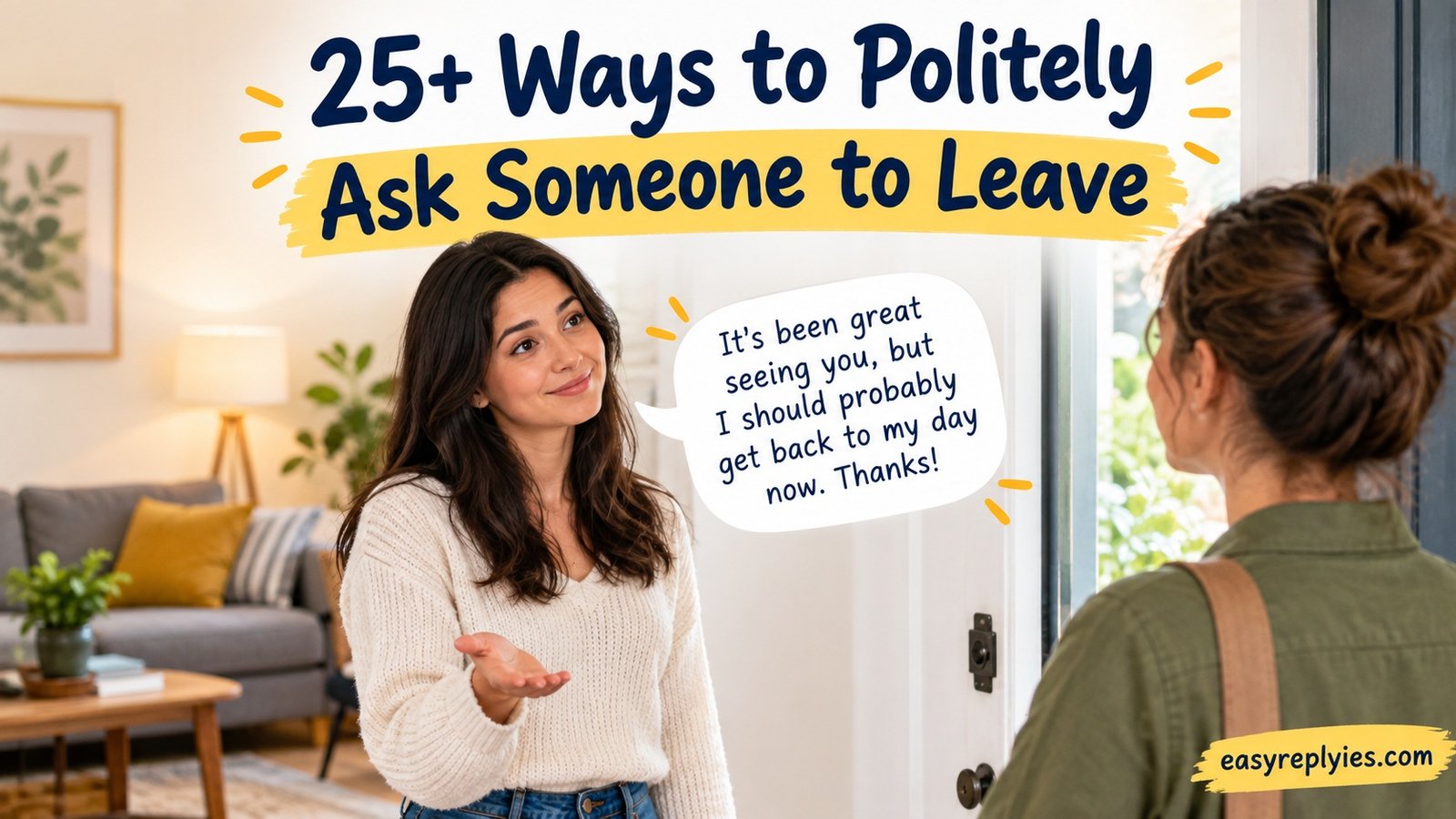
Ways to Politely Ask Someone to Leave You Alone Without Sounding Rude can help you set clear boundaries while keeping your message respectful. Sometimes, asking someone to leave you alone is a reasonable way to create space, regain focus, enjoy a quiet moment, or recharge after a busy day. You may be tired, emotionally, mentally, or physically drained and simply need time to yourself. In everyday life, this may happen with a friend, coworker, family member, or acquaintance.
Finding the right words can make your communication feel polite, honest, thoughtful, and respectful instead of rude, harsh, dismissive, or sounding rude. A short, clear, well-phrased request can also prevent misunderstandings, reduce tension, and protect dignity on both sides.There are many polite ways to ask someone for a little space without hurting the other person’s feelings.
A useful guide is to choose, adapt, and practice your words until they fit your voice and the different contexts you face. You can set aside time, give yourself distance, or start with a gentle request before using a firm request when a boundary is ignored. These situational approaches can help you express yourself clearly, kindly, and honestly while continuing to protect personal and professional relationships you want to preserve.
1. “I Just Need Some Time to Myself”
This is one of the gentlest ways to ask someone for space. It doesn’t accuse the other person of doing anything wrong; instead, it focuses on your own need. That’s useful when you’re talking to a friend, partner, or family member who may take a harsher statement personally.
Meaning
You’re saying that you need some quiet or personal time and would prefer not to interact right now.
Tone
Gentle, honest, respectful, and personal.
Example
Friend: Want to hang out? You seem quiet today.
You: I appreciate you checking in. I just need some time to myself today.
Best Use
Use this with people you care about when you want space without making them feel rejected.
2. “Could You Give Me a Little Space, Please?”
When you want to be polite but unmistakably clear, this is a strong choice. The word “please” softens the request, while “give me some space” clearly communicates your boundary.
Meaning
You’re asking the person to stop approaching you or interacting with you for a while.
Tone
Polite, confident, and direct.
Example
Friend: Why aren’t you talking to me?
You: Nothing personal. Could you give me a little space, please?
Best Use
This works well in face-to-face conversations, texting, and situations where someone isn’t noticing your quieter signals.
3. “I’m Not Really Up for Talking Right Now”
Sometimes you don’t want to explain why you need space. This response gives a simple reason without opening the door to a long discussion.
Meaning
You’re currently unavailable for conversation and would rather not engage.
Tone
Casual, calm, and straightforward.
Example
Coworker: Got a minute? I wanted to talk about something.
You: I’m not really up for talking right now. Can we catch up later?
Best Use
Ideal for casual conversations, friends, family, or coworkers when you need temporary quiet.
4. “I Need a Little Quiet Right Now”
Not every request for space is about the person. Sometimes you are simply overwhelmed, tired, studying, working, or trying to concentrate.
Meaning
You’re asking for silence rather than rejecting the person.
Tone
Gentle, neutral, and practical.
Example
Sibling: Can I show you this video?
You: In a little while. I need some quiet right now.
Best Use
Use this at home, at school, in an office, or anywhere you need uninterrupted concentration.
5. “I’ll Talk to You Later”
This short response is useful when you don’t want to have a long explanation. It acknowledges the person while making it clear that the conversation needs to end for now.
Meaning
You’re postponing the interaction rather than permanently ending it.
Tone
Friendly, brief, and casual.
Example
Friend: Wait, I have one more thing to tell you.
You: I’ll talk to you later. I need to take care of something right now.
Best Use
Best for friends, relatives, and casual conversations where you want to leave the door open.
6. “I’d Rather Have Some Alone Time Right Now”
This sounds slightly more deliberate than simply saying you’re busy. It works particularly well when you genuinely want to be alone rather than simply postpone one conversation.
Meaning
You’re intentionally choosing some personal time and asking the other person to respect it.
Tone
Calm, mature, and respectful.
Example
Partner: Do you want to talk about what’s bothering you?
You: I appreciate that, but I’d rather have some alone time right now.
Best Use
Useful in relationships, friendships, and family situations where emotional space matters.
7. “I’m Going to Take Some Time Offline”
For texting and social media, this can be more natural than directly saying “leave me alone.” It communicates that you won’t be available without making the situation unnecessarily confrontational.
Meaning
You’re stepping away from messages and online interaction for a while.
Tone
Casual, modern, and neutral.
Example
Friend: Why aren’t you replying?
You: I’m going to take some time offline. I’ll catch up with you later.
Best Use
Especially suitable for texting, social media, group chats, and online conversations.
8. “Please Let Me Have Some Personal Space”
This response is more serious because it explicitly describes your need as a boundary. It remains polite but doesn’t leave much room for misunderstanding.
Meaning
You’re asking someone to respect your physical, emotional, or conversational boundaries.
Tone
Respectful, firm, and mature.
Example
Person: Why are you avoiding me?
You: I’m not trying to be rude. Please let me have some personal space.
Best Use
Appropriate when someone is repeatedly approaching you or ignoring softer hints.
9. “I’m Busy at the Moment, So I Need to Focus”
If you’re working, studying, driving, or completing an important task, you can frame the request around your current responsibility.
Meaning
You’re unavailable because you need to concentrate.
Tone
Professional, reasonable, and polite.
Example
Coworker: Can I tell you something?
You: Sure, but I’m busy at the moment and need to focus. Let’s talk afterward.
Best Use
Particularly useful in workplaces, classrooms, study sessions, and professional environments.
10. “Could We Continue This Conversation Another Time?”
Rather than explicitly telling someone to leave you alone, you can redirect the conversation to a later time. This is especially useful when maintaining a good relationship matters.
Meaning
You want the conversation to stop now but may be willing to revisit it later.
Tone
Courteous, diplomatic, and professional.
Example
Colleague: Do you have time to discuss this project?
You: I’d like to give it proper attention. Could we continue this conversation another time?
Best Use
A good choice for colleagues, acquaintances, clients, and other professional contacts.
11. “I Need a Break From Everything Right Now”
Sometimes you need distance from everyone, not just one particular person. This response makes that distinction clear.
Meaning
You’re emotionally or mentally unavailable and need a temporary break from interaction.
Tone
Honest, gentle, and vulnerable.
Example
Friend: Did I do something wrong?
You: No, you didn’t. I just need a break from everything right now.
Best Use
Helpful with close friends or family when you want to prevent them from assuming your request is personal.
12. “I Hope You Don’t Take This Personally, but I Need Some Space”
This is useful when you are concerned that the other person might interpret your request as rejection.
Meaning
You’re setting a boundary while reassuring them that the request isn’t necessarily about them.
Tone
Considerate, reassuring, and direct.
Example
Friend: You haven’t been talking much lately.
You: I hope you don’t take this personally, but I need some space at the moment.
Best Use
Good for friendships, relationships, and sensitive conversations.
13. “I’d Appreciate It If You Could Give Me Some Privacy”
When privacy is the main issue, say exactly that. You don’t need to invent an excuse or justify why you want to be alone.
Meaning
You’re asking the person to respect your privacy.
Tone
Polite, firm, and composed.
Example
Family member: What are you doing in here?
You: I’d appreciate it if you could give me some privacy for a little while.
Best Use
Useful with family, roommates, friends, or anyone entering your personal space.
14. “I’m Going to Be on My Own for a While”
This is softer than saying “please leave me alone,” making it useful when you want to avoid unnecessary tension.
Meaning
You’re informing the person that you’ll be spending some time alone.
Tone
Friendly, casual, and low-pressure.
Example
Friend: Want some company?
You: Thanks, but I’m going to be on my own for a while.
Best Use
Works well with friends, family, roommates, and people you generally have a good relationship with.
15. “Nothing’s Wrong—I Just Don’t Feel Like Socializing”
People sometimes keep asking questions because they assume something is wrong. This response removes that uncertainty.
Meaning
You’re clarifying that your desire for solitude isn’t necessarily caused by a problem with them.
Tone
Honest, casual, and reassuring.
Example
Friend: Are you upset with me?
You: No, nothing’s wrong. I just don’t feel like socializing today.
Best Use
Especially helpful when someone is worried that your quietness means you’re angry with them.
16. “Can We Have Some Distance for a Little While?”
This phrase is useful when you need more than just a few minutes of quiet. It creates a clearer temporary boundary.
Meaning
You’re requesting physical or emotional distance for a period of time.
Tone
Calm, serious, and respectful.
Example
Person: Can we talk about this again?
You: I think we should have some distance for a little while before we continue.
Best Use
Useful during tense personal situations, disagreements, or emotionally charged conversations.
17. “I Don’t Have the Energy for This Conversation Right Now”
This response works when the conversation itself is draining, repetitive, or emotionally demanding.
Meaning
You’re saying that you currently lack the energy or capacity to continue talking.
Tone
Honest, direct, and moderately firm.
Example
Friend: Come on, let’s keep arguing about it.
You: I don’t have the energy for this conversation right now. I’m going to step away.
Best Use
Best when someone keeps pushing a discussion that you no longer want to continue.
Quick tip: This phrase is more appropriate for personal situations than formal workplace communication.
18. “I’d Prefer Not to Continue This Conversation”
When you don’t want to debate, explain, or negotiate, this gives you a clean way to end the interaction.
Meaning
You’re making it clear that you don’t want the current discussion to continue.
Tone
Firm, controlled, and respectful.
Example
Person: But why won’t you explain yourself?
You: I understand you want an explanation, but I’d prefer not to continue this conversation.
Best Use
Useful when someone keeps pressing you after you’ve already expressed your position.
19. “Please Respect That I Need Some Time Alone”
This response is particularly useful when you’ve already asked for space but the person continues contacting you.
Meaning
You’re reinforcing an existing boundary and asking the person to take it seriously.
Tone
Firm, respectful, and confident.
Example
Friend: I’m still going to come over.
You: I understand, but please respect that I need some time alone.
Best Use
Appropriate when a gentle request hasn’t been enough.
20. “I’m Not Available for This Right Now”
This is a useful professional alternative when “leave me alone” would sound too blunt.
Meaning
You’re unavailable for the interaction, discussion, or request at that moment.
Tone
Professional, neutral, and firm.
Example
Coworker: Can we go over this again?
You: I’m not available for this right now. I’ll let you know when I can discuss it.
Best Use
Excellent for work, professional messages, clients, and formal conversations.
21. “I Need You to Give Me Some Space”
Sometimes politeness should not come at the expense of clarity. If someone is ignoring subtle hints, this direct sentence can be much more effective.
Meaning
You’re clearly asking the person to stop approaching or engaging with you.
Tone
Direct, confident, and respectful.
Example
Person: Why are you walking away?
You: Because I need you to give me some space right now.
Best Use
Use when softer wording has not worked and you need a clear boundary.
22. “I’d Really Appreciate Some Quiet Right Now”
This is a softer alternative when you don’t want your request to sound confrontational.
Meaning
You’re asking for peace and quiet while showing appreciation for the other person’s cooperation.
Tone
Gentle, courteous, and calm.
Example
Roommate: Want to watch something together?
You: Maybe later. I’d really appreciate some quiet right now.
Best Use
Great for roommates, family, friends, study environments, or shared spaces.
23. “I’m Going to Step Away for a Bit”
This is an indirect but natural way to end an interaction. Instead of ordering someone away, you’re announcing your own decision to disengage.
Meaning
You’re removing yourself from the conversation or situation temporarily.
Tone
Casual, calm, and non-confrontational.
Example
Friend: We’re not finished talking.
You: I know, but I’m going to step away for a bit. We can talk later.
Best Use
Useful during disagreements, stressful conversations, and situations where continuing to talk would make things worse.
24. “I Don’t Want to Talk Right Now, but Thank You for Understanding”
Adding appreciation can soften a firm boundary without weakening it.
Meaning
You’re clearly declining the conversation while acknowledging that you expect the other person to respect your decision.
Tone
Polite, mature, and firm.
Example
Friend: Can I ask what’s going on?
You: I don’t want to talk right now, but thank you for understanding.
Best Use
A strong option for sensitive personal conversations when you want to remain respectful.
25. “I’ve Asked for Some Space, and I Need You to Respect That”
When someone continues ignoring your request, you don’t necessarily need a cleverer sentence—you need a clearer one.
Meaning
You’re reminding the person that you’ve already communicated your boundary and expect it to be respected.
Tone
Firm, serious, and confident.
Example
Person: I’m just trying to talk to you.
You: I understand, but I’ve asked for some space, and I need you to respect that.
Best Use
Best when repeated polite requests haven’t worked.
Important: If someone continues to ignore a clearly stated boundary or makes you feel unsafe, prioritize your safety rather than trying to find increasingly polite wording. Depending on the situation, stepping away, blocking communication, involving someone you trust, or seeking appropriate help may be more useful.
Read More:25 Clever Responses to “What’s the Password?”
Short Ways to Ask Someone to Leave You Alone Over Text
Text messages often work best when they’re brief. You don’t need to write a long explanation just because you’re setting a boundary. A few natural options include:
- “I need some space right now.”
- “Can we talk later?”
- “I’m taking some time for myself.”
- “I’m not available right now.”
- “Please give me a little space.”
- “I need some quiet for a while.”
- “I’ll reach out when I’m ready.”
- “I’m going offline for a bit.”
- “I don’t feel like talking right now.”
- “I’d appreciate some privacy.”
Meaning
These messages communicate that you aren’t available without creating a long conversation.
Tone
Short, casual, polite, and clear.
Example
Them: Why aren’t you answering me?
You: I need some space right now. I’ll reach out when I’m ready.
Best Use
Ideal for texting, messaging apps, and social media.
Better choice: If you genuinely don’t know how the other person will react, avoid jokes or sarcasm and choose a simple, unambiguous sentence.
Polite Ways to Ask a Friend to Leave You Alone
With friends, the goal is often to create space without making them think the friendship itself is the problem. A little reassurance can help.
Meaning
You’re asking your friend to step back temporarily while making it clear that you aren’t necessarily ending the relationship.
Tone
Friendly, reassuring, and honest.
Example
Friend: Why are you ignoring me?
You: I’m not ignoring you. I just need a little alone time today. I’ll talk to you later.
Best Use
Use this with close friends, especially when you want to preserve the relationship while establishing a temporary boundary.
Polite Ways to Ask Someone to Leave You Alone at Work
Workplace communication requires extra care. Saying “leave me alone” may sound unnecessarily hostile, even when you’re simply trying to concentrate. Explain your availability instead.
Meaning
You’re communicating that you need uninterrupted time without creating interpersonal conflict.
Tone
Professional, neutral, and courteous.
Example
Coworker: Can I interrupt you for a second?
You: I’m working against a deadline right now. Could we talk once I finish this?
Best Use
Use this with coworkers, supervisors, clients, or professional contacts when appropriate to the relationship.
Workplace tip: Focus on the task or timing rather than criticizing the person. “I need to concentrate” generally lands better than “You’re distracting me.”
Polite Ways to Ask Someone to Leave You Alone in Person
Face-to-face situations can feel more difficult because the other person can immediately respond. Keep your voice calm and your wording simple.
Meaning
You’re setting a spoken boundary and making your immediate need clear.
Tone
Calm, confident, and direct.
Example
Person: Why won’t you talk to me?
You: I don’t want to talk right now. Please give me some space.
Best Use
Useful when someone is physically nearby and isn’t recognizing your nonverbal signals.
Funny Ways to Ask Someone to Leave You Alone
Humor can work when you’re dealing with a friend who understands your personality and isn’t actually threatening or disrespecting you. It should never replace a clear boundary when someone is genuinely bothering you.
Meaning
You’re asking for space in a playful way rather than sounding serious or angry.
Tone
Funny, playful, and lighthearted.
Example
Friend: I’m staying here until you tell me what’s wrong.
You: My social battery is at 1%. Please allow me to enter low-power mode.
Best Use
Best with close friends or people who understand your humor.
Watch the tone: Sarcasm is risky over text because the other person cannot hear your voice or see your expression.
Confident Ways to Ask Someone to Leave You Alone
Confidence doesn’t require rudeness. In fact, the strongest boundary is often a simple sentence delivered without excessive explanation.
Meaning
You’re clearly stating what you need without apologizing for having a boundary.
Tone
Confident, firm, and composed.
Example
Person: But I need to know why you’re leaving.
You: You don’t have to agree with my decision. I need some space, and I’m going to take it.
Best Use
Use when someone is challenging your boundary or repeatedly demanding an explanation.
Respectful Ways to End an Unwanted Conversation
If the problem isn’t necessarily the person but simply the conversation, ending it directly can prevent the interaction from dragging on.
Meaning
You’re closing the conversation instead of continuing to provide explanations.
Tone
Polite, controlled, and decisive.
Example
Person: But there’s still more to discuss.
You: I understand. I don’t want to continue this conversation right now, so I’m going to leave it here.
Best Use
Useful with acquaintances, difficult conversations, disagreements, and persistent conversational partners.
When “Please Leave Me Alone” Is Actually the Right Choice
Politeness is valuable, but you don’t need to disguise a serious boundary behind vague language. If someone repeatedly ignores your requests for space, a direct statement may be appropriate.
Meaning
You’re making your boundary unmistakable instead of continuing to soften it.
Tone
Direct, firm, and serious.
Example
Person: I’m not going anywhere until you talk to me.
You: I’ve already asked you for space. Please leave me alone.
Best Use
Use when previous requests have been ignored.
The important distinction is between being rude and being clear. You can state a firm boundary without insulting, threatening, or humiliating someone.
How to Ask Someone to Leave You Alone Without Feeling Guilty
Many people struggle with boundaries because they worry that asking for space makes them selfish. It doesn’t. You are allowed to decide when you are available for conversation.
Meaning
The goal is to communicate your needs without taking responsibility for controlling the other person’s feelings.
Tone
Calm, self-assured, and respectful.
Example
Friend: I thought you’d want me around.
You: I appreciate that you care. I just need some time alone, and I hope you can respect that.
Best Use
Helpful when you tend to over-explain, apologize excessively, or feel responsible for another person’s reaction.
A useful rule is: explain enough to be clear, but not so much that your boundary becomes a negotiation.
How to Choose the Right Response
The best way to ask someone to leave you alone depends on who they are, why you need space, and whether they’ve respected your previous requests.
If it’s a close friend
Try something gentle:
“I just need some alone time. I’ll talk to you later.”
If it’s a coworker
Keep the focus on your work:
“I’m concentrating on something right now. Could we talk later?”
If it’s someone you’re dating
Be honest without unnecessarily blaming them:
“I need some space right now. It’s not something I want to discuss yet.”
If someone keeps pushing
Be firmer:
“I’ve asked for some space, and I need you to respect that.”
If the situation feels unsafe
Don’t worry about finding the perfect polite phrase. Your safety and ability to leave the situation matter more than sounding pleasant.
What to Avoid When Asking for Space
Sometimes the wording creates more problems than the boundary itself. Avoid statements that are intentionally insulting, unnecessarily vague, or designed to provoke the other person.
Meaning
You’re learning how to make your message clear without escalating the situation.
Tone
Mature, controlled, and respectful.
Example
Instead of:
“Can’t you take a hint?”
Try:
“I need some space right now. Please respect that.”
Instead of:
“You’re so annoying.”
Try:
“I’m not in the mood to talk at the moment.”
Best Use
This approach is useful whenever you want to establish distance without turning the interaction into an argument.
What to Say When Someone Asks Why You Want to Be Alone
You don’t always owe a detailed explanation. If someone asks “Why?”, you can provide as much information as you’re comfortable sharing.
Meaning
You’re reinforcing your boundary without getting pulled into an unwanted discussion.
Tone
Calm, private, and confident.
Example
Them: Why do you need to be alone?
You: I just need some personal time. There’s nothing else I want to discuss right now.
Best Use
Helpful with friends, family, coworkers, or acquaintances who keep asking for an explanation.
A simple “I just need some time to myself” can be enough.
When to Be Polite and When to Be Firm
The ideal response changes as the situation changes. If someone makes one casual attempt to talk to you, a gentle response is usually enough. If they repeatedly ignore your requests, continuing to soften your language can make your boundary less clear.
Meaning
You’re matching the strength of your response to the behavior you’re experiencing.
Tone
Flexible, thoughtful, and assertive.
Example
First request:
“Could you give me a little space? I’ll talk to you later.”
Repeated behavior:
“I’ve already asked for some space. Please respect my boundary.”
Best Use
Use a gradual approach when appropriate, but don’t feel obligated to remain endlessly polite when someone refuses to respect a clearly stated boundary.
Frequently Asked Questions
What is the nicest way to ask someone to leave you alone?
A gentle option is, “I appreciate you, but I need some time to myself right now.” It communicates your need without directly criticizing the other person.
How do I politely tell someone I don’t want to talk?
Keep it short and honest. You can say, “I’m not really up for talking right now. I’ll reach out when I’m ready.” You don’t need to invent an elaborate excuse.
What is a good text to send when you need space?
Try, “I need some space right now, so I’m going to step away from my phone for a while. I’ll get back to you later.” It works particularly well when you want to prevent repeated messages.
How can I ask someone to leave me alone without being rude?
Focus on your needs rather than their faults. “I need some privacy” is generally less confrontational than “You’re bothering me.”
What should I say if someone keeps ignoring my request for space?
Become clearer and firmer: “I’ve asked for some space, and I need you to respect that.” If they continue to ignore your boundary, consider ending the interaction or removing yourself from the situation.
Should I explain why I want to be alone?
Only if you want to. A brief explanation can reassure someone you care about, but you aren’t required to provide personal details simply because someone asks.
Conclusion
Knowing how to ask someone to leave you alone politely is really about setting a clear boundary without unnecessary hostility. The right wording depends on the relationship and situation: a friend may respond well to a gentle request for alone time, while a persistent person may require a firmer statement.
Keep your message simple, use a tone that matches the situation, and avoid over-explaining when you don’t need to. Most importantly, remember that asking for privacy or quiet is not automatically rude. A respectful boundary can be both kind and clear.











1 thought on “25 Ways to Politely Ask Someone to Leave”