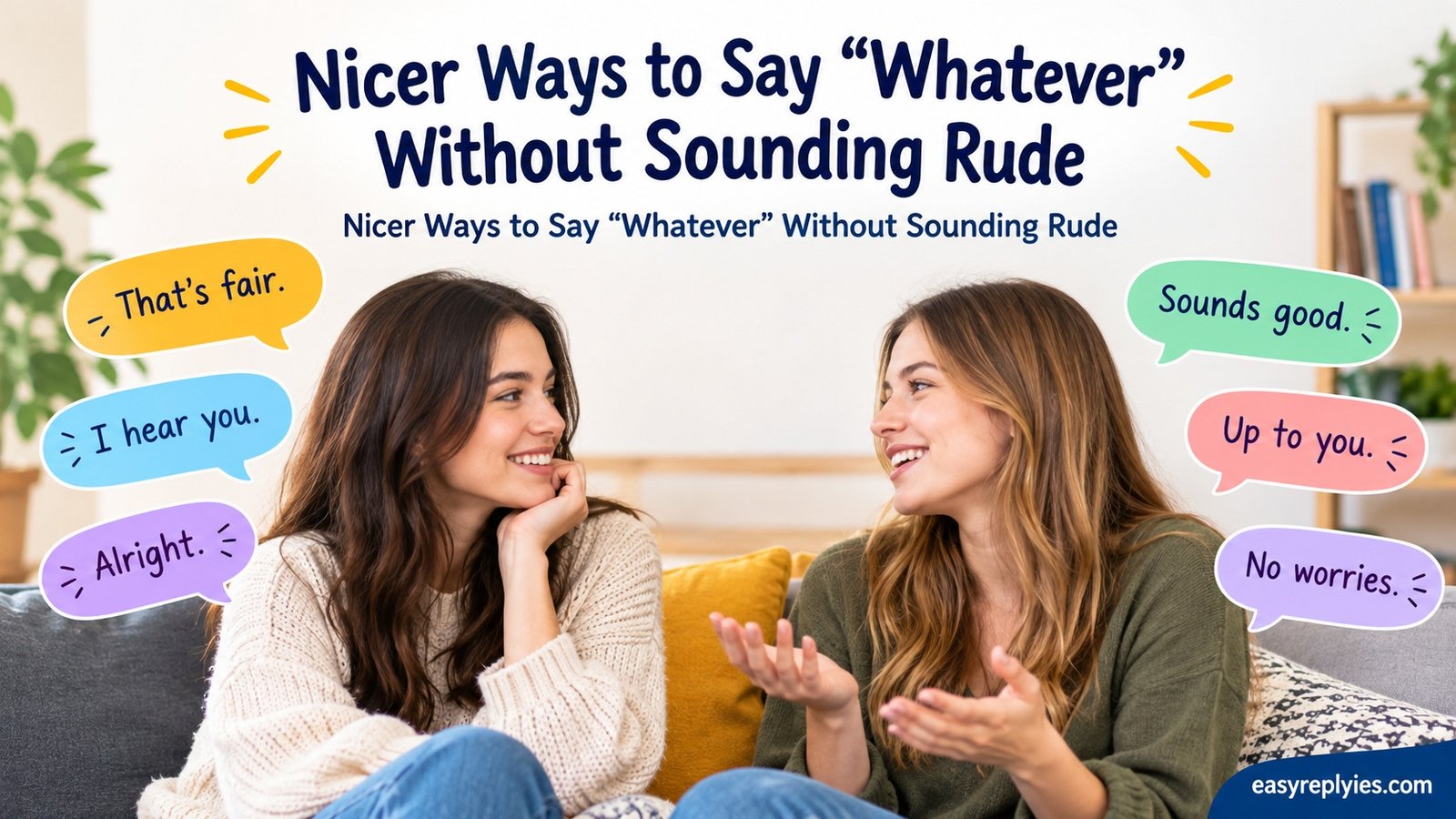
Finding Nicer Ways to Say “Whatever” Without Sounding Rude can help you choose respectful words when a tiny word carries a big emotional tone. Whatever can have a surprisingly big effect on a conversation, depending on your tone, attitude, and emotional tone. It may sound dismissive, annoyed, sarcastic, uninterested, or simply casual, even when you genuinely mean that you do not mind, care, or have a strong opinion. In everyday communication, the same idea can change meaning when different words are chosen. The other person may hear a rude or disrespectful message instead of what you intended. For that reason, knowing nicer ways to respond can make everyday conversations smoother. A polite, respectful, and flexible alternative phrase can express indifference without creating tension or making someone feel ignored.
The right phrase depends on the situation, context, intention, relationship, and social context. In casual communication, text messages, and daily conversations, a natural phrase can make your response sound more conversational. The best wording may also work differently in requests, greetings, apologies, disagreements, arguments, and ordinary interaction. During a discussion or conflict, patience and politeness can help you gently end an argument and move toward resolution without increasing annoyance. These differences matter in interpersonal communication, everyday language, and conversation skills, especially when you want to avoid sounding harsh.
A more natural choice can also reflect your preference and flexibility. Sometimes you are completely comfortable letting another person decide; sometimes you are actually bothered but want to express yourself calmly. Understanding tone changes helps you recognize how words describe feelings and how small changes can affect communication. Polite vs Rude Words can help you learn these distinctions through structured lists, examples, and clear word choices that explain why one expression may sound warmer. This post provides practical guidance for school, the workplace, and social settings, where respectful language matters. When you need an alternative, want to sound more natural, or need an ending for a difficult interaction, choosing your words carefully can help the conversation move more smoothly.
1. “I’m Fine Either Way” — When You Truly Don’t Mind
This is one of the easiest replacements when “whatever” means that you are genuinely comfortable with either option. It communicates flexibility without sounding uninterested.
Meaning
“I’m fine either way” tells the other person that both choices work for you. It leaves the decision open while still showing that you are participating in the conversation.
Tone
Friendly, flexible, neutral, and polite.
Example
Friend: Should we eat pizza or burgers?
You: I’m fine either way. You can choose.
Best Use
Use it with friends, family, coworkers, or anyone when you honestly have no strong preference.
2. “Either Option Works for Me” — A Clear, Polite Alternative
Sometimes “whatever” sounds vague because the other person does not know whether you actually agree. This phrase makes your position much clearer.
Meaning
It means you are happy with either available choice and do not need to control the decision.
Tone
Polite, cooperative, and straightforward.
Example
Coworker: Do you want to meet Tuesday or Wednesday?
You: Either option works for me.
Best Use
This works especially well in workplace conversations, scheduling, and group decisions.
3. “I Don’t Have a Preference” — When You Want to Be Direct
If you want a simple replacement for “whatever,” this is one of the most useful choices.
Meaning
You are saying that you have no particular preference rather than dismissing the other person’s suggestion.
Tone
Neutral, mature, and direct.
Example
Friend: Which movie should we watch?
You: I don’t have a preference. Pick whichever one you want.
Best Use
Use this when you truly do not care which option is selected but still want to sound respectful.
4. “Whatever You Prefer” — Letting Someone Else Choose
This phrase works well when you want to hand the decision over to someone else.
Meaning
You are giving the other person permission to choose according to their preference.
Tone
Considerate, relaxed, and accommodating.
Example
Sibling: Do you want to leave at six or seven?
You: Whatever you prefer is fine with me.
Best Use
It is particularly useful for casual plans, family decisions, dates, and friendly conversations.
5. “I’m Good With That” — A Natural Casual Reply
“I’m good with that” sounds much warmer than “whatever” while staying short enough for everyday texting.
Meaning
It communicates that you accept or agree with the suggestion.
Tone
Casual, friendly, positive, and relaxed.
Example
Friend: Let’s just meet at the café around seven.
You: I’m good with that.
Best Use
This is ideal for texts, group chats, friends, and informal conversations.
6. “That Works for Me” — Simple and Respectful
When you want to confirm that someone’s suggestion is acceptable, “that works for me” is much more constructive than “whatever.”
Meaning
You are agreeing that the proposed plan or idea is suitable for you.
Tone
Polite, cooperative, and confident.
Example
Coworker: How about we finish this tomorrow morning?
You: That works for me.
Best Use
This phrase is excellent for work, appointments, planning, and everyday conversations.
7. “I’m Open to Either” — When You Want to Sound Flexible
If you want to show that you are willing to consider different choices, this alternative feels thoughtful rather than dismissive.
Meaning
You are saying that more than one option is acceptable and you are willing to go with the discussion.
Tone
Open-minded, calm, and cooperative.
Example
Friend: Beach or hiking this weekend?
You: I’m open to either.
Best Use
Use it when you want to appear flexible without completely avoiding the decision.
8. “You Can Decide” — When You’re Happy to Let Them Choose
Sometimes “whatever” really means, “You choose.” Saying that directly is much clearer.
Meaning
You are intentionally allowing the other person to make the final decision.
Tone
Casual, trusting, and neutral.
Example
Partner: Which restaurant should we try?
You: You can decide. I’m happy with either.
Best Use
Use this when you genuinely trust the other person’s choice.
Quick tip: Add “I’m happy with either” if you want to make sure “You can decide” does not sound like you are avoiding the conversation.
9. “I’m Happy to Go With Your Choice” — A Warmer Version
This is a useful option when you want your flexibility to sound intentional and positive.
Meaning
You are telling someone that you are comfortable following their preference.
Tone
Warm, considerate, supportive, and polite.
Example
Friend: I think the earlier train would be easier.
You: I’m happy to go with your choice.
Best Use
This fits friends, family, travel plans, and collaborative decisions.
10. “No Strong Preference Here” — Casual but Clear
If you want something slightly more conversational, this phrase works naturally.
Meaning
You have considered the options but do not strongly favor one.
Tone
Casual, relaxed, and honest.
Example
Friend: Pasta or rice?
You: No strong preference here. What are you feeling?
Best Use
It works particularly well when you want to remain involved instead of simply saying that the other person should decide.
11. “I’m Easy” — A Very Casual Option
In some English-speaking contexts, “I’m easy” can mean that you are flexible about the choice. However, context matters because the phrase can have other meanings.
Meaning
In the right context, it means you are not difficult to please and are happy with different options.
Tone
Very casual, relaxed, and conversational.
Example
Friend: Where should we grab lunch?
You: I’m easy. Anywhere nearby works.
Best Use
Best reserved for close friends and casual situations.
Watch the tone: Because “I’m easy” can sometimes be interpreted differently, “I’m flexible” is safer in professional or unfamiliar settings.
12. “I’m Not Too Bothered” — When You Truly Don’t Mind
This alternative is useful when someone asks whether a particular option matters to you.
Meaning
It means the choice doesn’t significantly affect you.
Tone
Casual, relaxed, and slightly understated.
Example
Friend: Does it matter if we go a little later?
You: I’m not too bothered. Later is fine.
Best Use
Use it with people who understand your casual communication style.
13. “I’m Happy Either Way” — A Friendly Response
This is warmer than simply saying “I don’t mind” and can make your willingness to compromise obvious.
Meaning
You are comfortable with both possibilities and will be satisfied regardless of the final choice.
Tone
Friendly, positive, reassuring, and cooperative.
Example
Friend: Want to sit inside or outside?
You: I’m happy either way. Whatever is more comfortable for you.
Best Use
Great for friends, dates, family, and informal plans.
14. “It’s Up to You” — When You Want Them to Choose
This is a straightforward alternative when you want to hand over the decision.
Meaning
You are giving the other person control over the choice.
Tone
Neutral and casual, although delivery matters.
Example
Friend: Should I book the 6 p.m. or 7 p.m. ticket?
You: It’s up to you. Both times work for me.
Best Use
Use it when you genuinely do not have a preference.
Better choice: Adding “both work for me” makes the phrase sound cooperative rather than dismissive.
Read More:25 Funny Responses to “Best Places for Someone to Study”
15. “I Don’t Mind” — The Classic Polite Replacement
“I don’t mind” is one of the simplest ways to communicate what people often mean when they say “whatever.”
Meaning
You are saying that the outcome is not important enough for you to object.
Tone
Neutral, polite, and understated.
Example
Sibling: Is it okay if we watch your movie instead?
You: I don’t mind.
Best Use
It works in both casual and moderately formal conversations.
Watch the tone: A very flat “I don’t mind” can still sound irritated. A warmer delivery or a few extra words can help.
16. “Whichever You’d Like” — A Considerate Choice
This phrase is especially useful when you want to make another person’s preference feel respected.
Meaning
You are giving them freedom to choose the option they prefer.
Tone
Polite, thoughtful, and accommodating.
Example
Friend: Should we take the window seat or the booth?
You: Whichever you’d like.
Best Use
Good for friends, family, dates, and polite everyday interactions.
17. “I’m Flexible” — A Confident, Useful Response
“I’m flexible” is better than “whatever” when you want to communicate that you can adapt without sounding passive.
Meaning
You are comfortable adjusting your plans or preferences to suit the situation.
Tone
Confident, professional, cooperative, and calm.
Example
Manager: Would Thursday or Friday work better for you?
You: I’m flexible. Either day works.
Best Use
This is particularly effective in professional communication, scheduling, and collaborative planning.
18. “I’m Okay With Either Choice” — Clear and Reassuring
If the other person keeps asking what you want, this response removes uncertainty.
Meaning
Both choices are genuinely acceptable to you, so they do not need to worry about disappointing you.
Tone
Reassuring, neutral, and friendly.
Example
Friend: Are you sure you don’t care which one we get?
You: Yeah, I’m okay with either choice.
Best Use
Use it when someone needs clear confirmation rather than a vague response.
19. “Whatever Works Best for You” — Putting Their Needs First
This is a particularly considerate alternative when the other person’s schedule or circumstances matter more.
Meaning
You are willing to accommodate the option that works best for them.
Tone
Thoughtful, supportive, and polite.
Example
Coworker: I can call at three or four. Which is better?
You: Whatever works best for you is fine.
Best Use
This is appropriate for work, scheduling, family arrangements, and helpful conversations.
20. “I’m Not Too Particular” — When You’re Easygoing
This phrase communicates flexibility while giving the other person useful information about your preferences.
Meaning
You are saying that you do not have strict requirements about the choice.
Tone
Easygoing, casual, and friendly.
Example
Friend: What kind of food do you want?
You: I’m not too particular. Pick somewhere you like.
Best Use
Use it for food, activities, shopping, travel plans, and casual decisions.
21. “I’m Happy to Compromise” — When Neither Choice Is Perfect
Sometimes “whatever” comes from being tired of going back and forth. If both people have preferences, this response can move the conversation forward constructively.
Meaning
You are willing to meet somewhere in the middle rather than arguing over whose preference wins.
Tone
Mature, cooperative, calm, and constructive.
Example
Partner: You want the early movie, but I want the late one.
You: I’m happy to compromise. How about the show in between?
Best Use
This works especially well for relationships, family discussions, group decisions, and disagreements.
Nicer Ways to Say “Whatever” in a Text
Text messages make tone harder to read because the other person cannot hear your voice or see your expression. A simple “whatever” can therefore look much harsher than you intended.
For casual texting, try:
- “I’m good with either.”
- “Either one works for me.”
- “You choose 😊”
- “I don’t mind.”
- “Whatever works for you.”
- “I’m flexible.”
- “I’m happy either way.”
Example
Friend: Movie night at my place or yours?
You: Either one works for me. You pick!
These versions keep the message short without making it sound cold.
Polite Ways to Say “Whatever” at Work
Professional conversations require a little more care. A coworker or manager may interpret “whatever” as frustration, indifference, or unwillingness to cooperate.
Instead, choose language such as:
- “Either option works for me.”
- “I’m flexible.”
- “That works on my end.”
- “I’m comfortable with either approach.”
- “I’m happy to go with your recommendation.”
- “Whatever works best for the team.”
Example
Manager: Would you prefer to present first or second?
You: I’m flexible. Either position works for me.
This keeps your answer professional and collaborative without making you sound overly formal.
Funny but Nice Alternatives to “Whatever”
If you’re talking to a close friend, you can replace “whatever” with something playful without turning the conversation into an argument.
Try:
- “I’m leaving the executive decision to you.”
- “You have been promoted to decision-maker.”
- “I’ll happily outsource this choice to you.”
- “Dealer’s choice.”
- “You’re the boss on this one.”
- “I have no horse in this race.”
Example
Friend: Pizza or tacos?
You: You have been promoted to decision-maker. I’m good with either.
These work best when the relationship already has a playful, joking tone.
Nicer Ways to Say “Whatever” During an Argument
If someone says something that annoys you, “whatever” may feel like the fastest way to end the conversation. Unfortunately, it can also make the disagreement worse.
Instead, try:
- “I see your point, even though I disagree.”
- “Let’s agree to disagree.”
- “I don’t think we’re going to agree on this.”
- “I’d rather not argue about it.”
- “I understand what you’re saying.”
- “Let’s leave it there for now.”
Example
Person A: You’re never going to change your mind.
You: Maybe not, but I understand your point. Let’s agree to disagree.
Best Use
These responses are better when your goal is to de-escalate rather than win the argument.
Respectful Ways to Say “Whatever” When You’re Annoyed
You can be irritated without sounding dismissive. The trick is to communicate your feeling instead of hiding it behind “whatever.”
Meaning
These phrases acknowledge that you’re frustrated while keeping the conversation respectful.
Tone
Direct, calm, and boundary-conscious.
Example
Friend: You keep interrupting me.
You: I hear you. I’m a little frustrated right now, so I’d rather continue this later.
Best Use
This approach is useful when the conversation has become tense or emotionally charged.
How to Choose the Right Alternative to “Whatever”
The best replacement depends on what you actually mean.
If you mean “I genuinely don’t care which one”, say:
“I don’t have a preference.”
If you mean “You can choose”, say:
“It’s up to you.”
If you mean “Your suggestion is fine”, say:
“That works for me.”
If you mean “I’m willing to adapt”, say:
“I’m flexible.”
If you mean “I don’t want to argue anymore”, say:
“Let’s leave it there.”
If you mean “I’m annoyed, but I want to stay respectful”, explain your feeling instead of using a dismissive word.
The goal is not to find one universally perfect replacement. It is to choose language that accurately communicates your intention and your relationship with the other person.
When “Whatever” Is Actually Fine
Not every use of “whatever” is rude. Among close friends, it can be completely harmless, especially when your tone makes the meaning obvious.
Meaning
Sometimes “whatever” simply means “I’m flexible” or “I don’t mind.”
Tone
Casual, familiar, and relaxed, depending on delivery.
Example
Friend: Blue shirt or black shirt?
You: Whatever, both look good on you.
Best Use
It is generally safer among people who already understand your communication style.
If you are unsure how your message will be received, a slightly warmer alternative is usually the better choice.
Frequently Asked Questions
What is the nicest way to say “whatever”?
A simple option is “I’m fine either way” because it clearly communicates flexibility without sounding dismissive. “Either option works for me” is another good choice when you want to sound more polished.
How can I say “whatever” politely in a text?
Try “I’m good with either,” “You can choose,” “I don’t mind,” or “Whatever works for you.” These are short enough for texting while sounding more cooperative.
What can I say instead of “whatever” at work?
Use professional alternatives such as “I’m flexible,” “Either option works for me,” or “I’m comfortable with either approach.” These phrases show that you are participating in the decision.
Is saying “whatever” rude?
Not always. Its meaning depends heavily on tone, context, and your relationship with the other person. Between close friends it may be harmless, while in an argument or professional setting it can sound dismissive.
What is a good alternative when I am annoyed?
If you want to avoid escalating the situation, try “I’d rather not argue about this,” “Let’s leave it there,” or “I think we should talk about this later.” These responses communicate a boundary more clearly than “whatever.”
How do I know which response to use?
First decide what you actually mean: no preference, agreement, flexibility, letting someone else choose, or wanting to end a disagreement. Then choose a phrase that expresses that meaning directly.
Conclusion
The nicest alternative to “whatever” is usually the one that makes your actual intention clear. If you genuinely have no preference, say “I’m fine either way.” If you want someone else to choose, try “It’s up to you.” For professional conversations, “I’m flexible” or “Either option works for me” sounds more constructive. And if you’re frustrated, addressing the frustration directly is usually better than using a dismissive “whatever.”
A useful final rule is simple: match your words to your intention, and match your tone to the relationship. That small adjustment can turn an answer that sounds cold into one that feels natural, respectful, and easy to understand.











1 thought on “25 Nicer Ways to Say “Whatever” Without Sounding Rude”