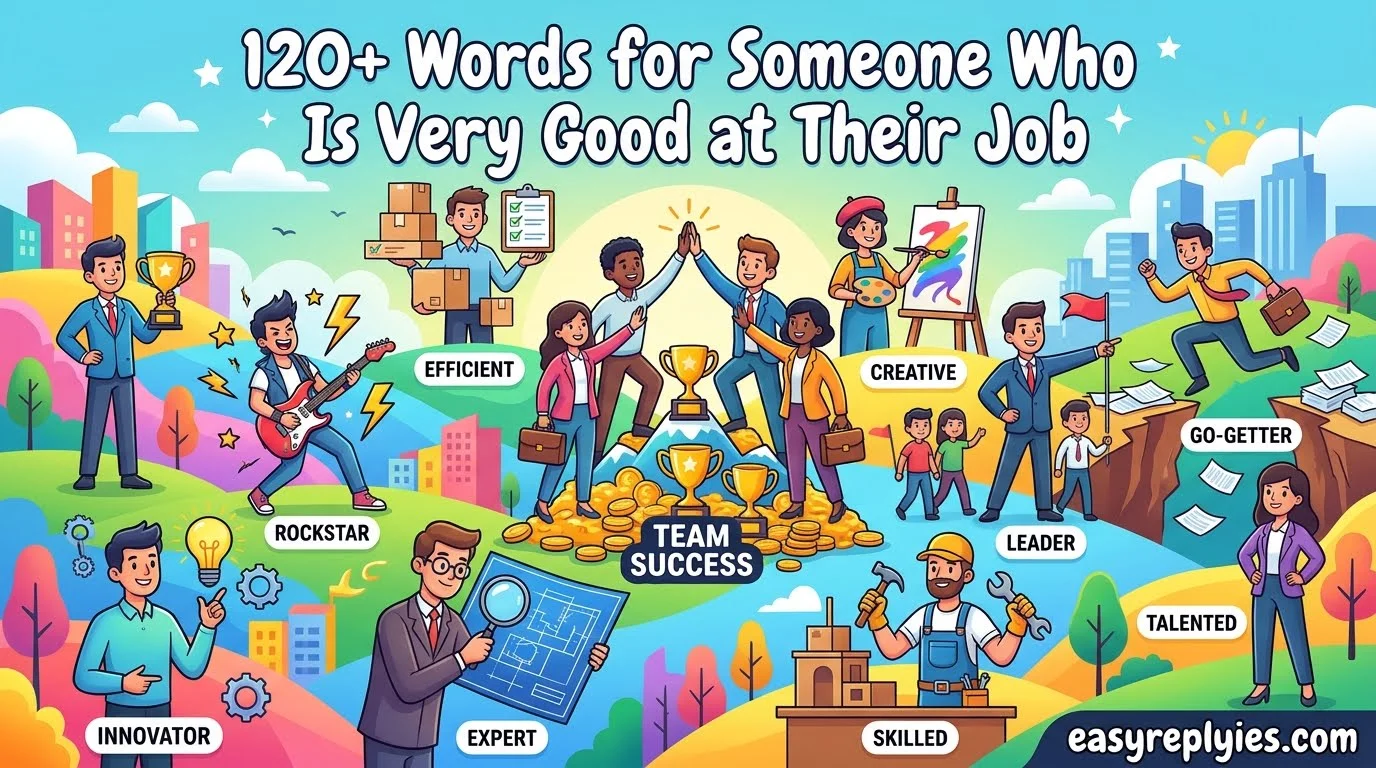
Funny and Clever Words for Someone Who Is Very Good at Their Job can make everyday praise more memorable, playful, and enjoyable at work today. A simple good job is safe and polite, but it can sometimes feel like plain toast—nice, yet completely forgettable.
In the office world, a never-ending meeting may feel like a marathon, while a coffee-fueled adventure, a daily battle, and overflowing inboxes can make the workday exhausting. A clever joke offers the perfect little break from the serious side of office life. In my experience, natural praise works best when it matches someone’s vibe. Whether employees solve problems, meet deadlines, survive meetings, or help a coworker by fixing the printer, a little humor makes appreciation more meaningful. You can use funny ways to say good job to celebrate your best friend, your kid, or a talented employee who makes the company better. Try a funny Instagram caption, a hilarious message, or something to share during a team chat. Funny employee quotes and workplace jokes bring laughter to the workday, while a quick example like “You didn’t just do a good job; you made it look easy!” delivers praise with personality.
A group chat legend, a workplace hero, or one of the real heroes keeping everything running deserves memorable compliments. These expressions fit everything from Monday morning struggles to Friday afternoon excitement and can improve the workplace mood. Sometimes, all you need is to grab your coffee, relax for a minute, and find time to laugh with your team. This list of 30 alternatives, grouped by style, offers better compliments without sounding repetitive. Choose something silly, over-the-top, or playful for a friend who enjoys jokes, or something wholesome, sweet, and full of heartfelt appreciation for someone who deserves genuine recognition. Sarcastic-but-kind expressions suit people who appreciate friendly teasing, while short one-liners work well in quick messages. Longer jokes can bring extra fun to a team celebration, and clever words, a funny caption, or witty quotes shared with coworkers can make your praise memorable. These alternatives help you steal your favorite expression and start handing out compliments today. After all, the best office benefits aren’t always written into company policies; sometimes, they’re simply good people who make work feel less like a battle and more like an adventure.
1. A Pro
Calling someone “a pro” is one of the easiest ways to recognize genuine skill without sounding overly formal. It suggests that the person knows what they are doing, handles situations confidently, and can be trusted to get the job done. It works especially well when you want to compliment someone casually rather than give them a grand speech.
Meaning
“A pro” means someone highly skilled, experienced, and capable at what they do.
Tone
Casual, friendly, confident
Example
Coworker: How did you fix that problem so quickly?
You: I’ve watched you do it. You’re a pro at this stuff.
Best Use
Use it with coworkers, friends, teammates, or anyone you know well. It works particularly naturally in conversation and text messages.
2. A Rockstar
“Rockstar” is a lively way to describe someone who performs exceptionally well. It does not literally mean a musician; in everyday workplace language, it suggests someone who stands out because of their talent, energy, or results.
Meaning
A “rockstar” is someone who performs exceptionally well and stands out from others.
Tone
Enthusiastic, playful, complimentary
Example
Manager: Thanks for getting that report finished ahead of schedule.
You: No problem. Sarah is the real rockstar here—she handled half of it before lunch.
Best Use
This works well in casual workplaces, team chats, social media posts, and friendly conversations.
3. A Mastermind
“Mastermind” suggests someone who understands how things work and can figure out complicated problems. It is especially appropriate when someone’s strength is strategy, planning, or problem-solving rather than simply working quickly.
Meaning
A mastermind is someone exceptionally clever at planning, solving problems, or organizing complicated work.
Tone
Clever, admiring, playful
Example
Friend: How did you organize that entire event without losing your mind?
You: I had a plan. Apparently, I’m becoming a bit of a mastermind.
Best Use
Use it when someone’s intelligence or strategic thinking deserves the compliment.
4. A Wizard
Calling someone a “wizard” is a fun way to say they seem almost magically good at something. It is particularly natural when the person’s skill is difficult for others to understand.
Meaning
A wizard is someone remarkably skilled at a particular task or field.
Tone
Funny, playful, admiring
Example
Coworker: How did you get the software working again?
You: Ask Mike. He’s basically a computer wizard.
Best Use
Great for technology, spreadsheets, design, cooking, mechanics, editing, or any skill where someone seems to make difficult things look easy.
5. A Whiz
“Whiz” is a short, friendly word for someone exceptionally good at something. It has a slightly old-fashioned flavor, but it still works naturally in casual speech.
Meaning
A whiz is someone extremely capable or clever in a particular area.
Tone
Friendly, upbeat, casual
Example
You: Need help with the numbers?
Coworker: Definitely.
You: Talk to Maya. She’s a spreadsheet whiz.
Best Use
Use it when describing someone’s particular area of expertise, such as math, computers, finances, or technology.
6. A Natural
Sometimes the most impressive people are the ones who make difficult work look effortless. Calling someone “a natural” highlights their instinctive ability rather than their years of training.
Meaning
A natural is someone who appears naturally talented at something.
Tone
Warm, complimentary, sincere
Example
Friend: I’ve only been doing photography for a few months.
You: Seriously? You’re a natural.
Best Use
This is especially good for someone who is new to a role but already demonstrates impressive ability.
7. A Master
“Master” communicates a very high level of skill. It is stronger than simply calling someone “good,” so it should be reserved for situations where the person’s ability genuinely deserves that level of praise.
Meaning
A master is someone with an exceptionally high level of knowledge or skill.
Tone
Respectful, confident, admiring
Example
Coworker: You somehow made that complicated presentation look simple.
You: Years of practice. I’m still working toward becoming a master.
Best Use
Suitable for professional praise, crafts, technical skills, cooking, art, or highly specialized work.
8. An Ace
“Ace” is a compact compliment that suggests someone is excellent at what they do. It can sound particularly natural in British and international English.
Meaning
An ace is someone highly capable, successful, or excellent at a particular task.
Tone
Casual, upbeat, complimentary
Example
You: Who should we ask to handle the client presentation?
Coworker: Definitely James. He’s an ace at presentations.
Best Use
Use it in casual workplace conversations, team discussions, or friendly messages.
9. A Powerhouse
“Powerhouse” describes someone who produces a lot of strong work and seems to have tremendous ability or energy. It is more energetic than simply saying “talented.”
Meaning
A powerhouse is someone exceptionally productive, capable, or effective.
Tone
Strong, enthusiastic, complimentary
Example
Manager: How did you finish all those tasks today?
You: I had a good day. Apparently, the powerhouse was fully charged.
Best Use
Good for coworkers, team members, entrepreneurs, athletes, creators, and people who consistently accomplish a lot.
10. A Machine
This is a humorous way to describe someone who works extremely efficiently. It suggests that they keep producing results with almost unbelievable consistency.
Meaning
A “machine” is someone who works with remarkable speed, consistency, or efficiency.
Tone
Funny, casual, energetic
Example
Coworker: You already finished all of that?
You: What can I say? Today I’m a machine.
Best Use
Best among friends or coworkers who appreciate joking compliments. Avoid it when a warm, personal compliment would be more appropriate.
11. A Legend
Calling someone “a legend” is a casual way to show strong admiration. It can refer to an impressive accomplishment rather than literally suggesting that the person is famous.
Meaning
A legend is someone whose actions, skill, or achievements deserve exceptional praise.
Tone
Playful, enthusiastic, affectionate
Example
Friend: I fixed the printer.
You: You absolute legend. I thought that thing was beyond saving.
Best Use
Perfect for friends, teammates, coworkers, and informal messages after someone saves the day.
12. A Genius
“Genius” is often used casually to praise an especially clever idea or solution. It does not always mean the person has extraordinary intellectual ability; in everyday conversation, it can simply mean, “That was incredibly smart.”
Meaning
A genius is someone who demonstrates exceptional intelligence, creativity, or problem-solving ability.
Tone
Admiring, enthusiastic, sometimes humorous
Example
Coworker: I automated the repetitive part of the process.
You: Genius. That just saved everyone hours.
Best Use
Use it when someone comes up with an unusually smart solution or idea.
13. A Go-Getter
A “go-getter” is someone who takes initiative and actively pursues results. The phrase focuses more on drive and determination than technical talent.
Meaning
A go-getter is an ambitious, motivated person who takes action and gets things done.
Tone
Positive, energetic, professional
Example
Manager: We needed someone to take ownership of the project.
You: Give it to Nina. She’s a real go-getter.
Best Use
This works especially well in professional conversations, recommendations, performance discussions, and workplace praise.
14. A Standout
“Standout” is useful when someone performs noticeably better or brings something special to a group. It sounds polished without becoming excessively formal.
Meaning
A standout is someone who distinguishes themselves through ability, quality, or performance.
Tone
Professional, positive, polished
Example
Manager: How did the new team members perform?
You: Daniel was definitely a standout.
Best Use
Use it in professional settings, reviews, recommendations, presentations, or workplace conversations.
15. An Expert
“Expert” is straightforward and credible. Unlike playful phrases such as “wizard” or “rockstar,” it clearly communicates that someone has substantial knowledge or skill in a particular area.
Meaning
An expert is someone with extensive knowledge or skill in a specific field.
Tone
Professional, respectful, direct
Example
You: If you need advice about the system, ask Priya. She’s the expert.
Best Use
Best for professional writing, workplace conversations, recommendations, and formal compliments.
Read More:120 Funny Responses to “Are You Still Alive?”
16. A Specialist
“Specialist” is useful when someone’s strength lies in a particular area rather than everything they do. It sounds precise and professional.
Meaning
A specialist is someone with advanced knowledge or skill in a particular area.
Tone
Professional, precise, respectful
Example
Coworker: Who knows the most about this software?
You: Carlos. He’s our specialist for that system.
Best Use
Excellent for workplaces, technical discussions, business writing, and professional introductions.
17. A Master of the Craft
This phrase adds warmth and respect to the idea of being highly skilled. It suggests that the person’s ability comes from both knowledge and careful practice.
Meaning
Someone who has developed an exceptionally high level of skill in their particular craft.
Tone
Respectful, thoughtful, admiring
Example
Friend: Your woodworking projects are incredible.
You: Thanks. I’ve been learning from a real master of the craft.
Best Use
Particularly suitable for creative work, trades, cooking, design, writing, art, and other crafts.
18. The Person Who Gets It Done
This phrase focuses on reliability rather than raw talent. It is ideal for someone who can be trusted when something actually needs to happen.
Meaning
Someone dependable who takes responsibility and consistently produces results.
Tone
Direct, confident, appreciative
Example
Manager: We need someone to handle the deadline.
You: Put Alex on it. He’s the person who gets it done.
Best Use
Very natural in workplace conversations and team settings.
19. A Problem-Solver
Some people are not necessarily flashy, but whenever something goes wrong, they know how to fix it. “Problem-solver” recognizes exactly that quality.
Meaning
Someone who is particularly skilled at identifying problems and finding practical solutions.
Tone
Professional, positive, practical
Example
Coworker: The project hit another issue.
You: Give it to Omar. He’s an excellent problem-solver.
Best Use
Great for professional settings, technical jobs, management, customer service, engineering, and project work.
20. A One-Person Department
For a humorous compliment, this one suggests that someone is so capable that they seem able to handle an entire department alone.
Meaning
A joking description of someone who can handle an unusually wide range of responsibilities.
Tone
Funny, playful, complimentary
Example
Coworker: You handled the client, fixed the report, and organized the meeting?
You: Apparently I’m a one-person department now.
Best Use
Best for friendly workplace banter or messages between coworkers who understand the joke.
21. The Office MVP
“MVP,” short for “most valuable player,” borrows language from sports to praise someone who contributes significantly to a team.
Meaning
The person who has made an especially valuable contribution to the team or project.
Tone
Playful, energetic, complimentary
Example
Manager: Great work on the launch, everyone.
You: Shout-out to Maya—the office MVP today.
Best Use
Works particularly well in team chats, workplace celebrations, informal emails, and social posts.
22. A Human Cheat Code
This is a deliberately exaggerated modern joke for someone who seems to make difficult tasks ridiculously easy.
Meaning
A humorous way of saying someone has an unusually powerful skill or ability.
Tone
Very playful, funny, informal
Example
Friend: How did you finish that puzzle so quickly?
You: Stop asking questions. You’re basically a human cheat code.
Best Use
Use with close friends or people who enjoy exaggerated humor. It is too informal for most professional situations.
23. A Walking Instruction Manual
This phrase jokingly describes someone who seems to know everything about their job.
Meaning
Someone with so much practical knowledge that they can explain almost anything related to their work.
Tone
Funny, playful, admiring
Example
Coworker: I don’t understand how this system works.
You: Ask Ben. He’s basically a walking instruction manual.
Best Use
Great for friendly coworkers, technical experts, and people who are always the first source of answers.
24. The Go-To Person
“The go-to person” is one of the most useful phrases when you want to praise someone’s reliability and expertise without exaggerating.
Meaning
The person others rely on when they need help, knowledge, or a particular task handled well.
Tone
Professional, friendly, respectful
Example
Coworker: Who should I ask about the new process?
You: Sarah is the go-to person for that.
Best Use
Ideal for workplaces, teams, recommendations, introductions, and everyday conversation.
25. An Absolute Pro at What They Do
When you want to compliment someone directly without sounding too fancy, this phrase gets the point across. It combines admiration with natural conversational language.
Meaning
Someone who demonstrates a very high level of competence and skill in their work.
Tone
Confident, friendly, enthusiastic
Example
Friend: Have you seen Jake’s latest work?
You: Yeah. He’s an absolute pro at what he does.
Best Use
Use it when speaking about someone’s work to friends, coworkers, clients, or other people who already know the person.
Funny Ways to Say Someone Is Extremely Good at Their Job
Sometimes you do not need a single adjective. A humorous phrase can make the compliment much more memorable, especially when talking to someone you know well.
Here are some playful options:
- “You make this look suspiciously easy.”
- “Did you secretly write the instruction manual?”
- “At this point, they should put your name on the job description.”
- “You’re making the rest of us look bad.”
- “Okay, save some talent for everyone else.”
- “You’re basically the final boss of this profession.”
- “I’m starting to think you actually know what you’re doing.”
- “You make competence look unfair.”
- “Who gave you permission to be this good?”
- “Honestly, this job looks like it was invented for you.”
These are deliberately exaggerated, so relationship and tone matter. A joke that makes a close coworker laugh could sound sarcastic or insulting to someone you barely know.
Professional Words for Someone Who Is Very Good at Their Job
If you are writing a recommendation, performance review, workplace message, or professional compliment, choose language that emphasizes specific strengths rather than exaggerated praise.
Useful options include:
- Expert
- Specialist
- Highly skilled
- Exceptional
- Proficient
- Accomplished
- Competent
- Capable
- Knowledgeable
- Highly effective
- Reliable
- Resourceful
- Experienced
- Dependable
- Outstanding performer
For example:
Instead of: “She’s insanely good at her job.”
Professional: “She is highly skilled, dependable, and consistently delivers high-quality work.”
That version communicates the same admiration while giving the compliment a more credible workplace tone.
Short Words for Someone Who Is Excellent at Their Work
When you need something quick for a text, caption, comment, or casual conversation, these are easy choices:
- Pro
- Ace
- Expert
- Whiz
- Genius
- Master
- Wizard
- Specialist
- Rockstar
- Legend
- Standout
- Powerhouse
The best choice depends on what you are actually praising. “Expert” emphasizes knowledge, “powerhouse” emphasizes productivity, “wizard” emphasizes unusual skill, and “go-getter” emphasizes initiative.
Words That Praise Skill Without Sounding Exaggerated
Not every compliment needs to sound dramatic. If you want something sincere and believable, try:
- Skilled
- Capable
- Competent
- Experienced
- Reliable
- Efficient
- Resourceful
- Knowledgeable
- Professional
- Accomplished
These words are especially useful when the person is a colleague, employee, manager, or professional contact.
How to Choose the Right Word
The best description depends less on how impressive the word sounds and more on what you are actually complimenting.
If the person knows their field extremely well, use expert or specialist.
If they solve complicated problems, problem-solver, mastermind, or wizard may fit better.
If they consistently deliver results, try powerhouse, go-getter, or the person who gets it done.
If you are joking with a friend, legend, machine, or human cheat code can be much more entertaining.
If you are writing something professional, stick with terms such as highly skilled, accomplished, resourceful, or highly effective.
Quick tip: When praising someone’s work, a specific compliment is usually more meaningful than a bigger compliment. “You’re an expert at handling difficult clients” tells the person much more than simply saying “You’re amazing.”
Words to Avoid When the Situation Is Formal
Some expressions are perfectly natural in casual conversation but can sound strange in a professional document.
For example, “machine,” “human cheat code,” “wizard,” “legend,” and “final boss” are humorous rather than formal. They can work in a friendly team chat but probably do not belong in a performance review or formal recommendation.
For formal situations, choose language that identifies a concrete strength:
“She consistently produces accurate work and handles complex assignments with confidence.”
That sounds more credible because it explains why the person is good at their job.
How to Compliment Someone Without Sounding Like You Are Flirting
Some enthusiastic compliments can accidentally sound personal or flirtatious, especially in text. If you want to keep the message clearly professional or friendly, focus on the person’s work, skill, or results.
Instead of:
“You’re ridiculously good at everything.”
Try:
“You’re incredibly good at solving problems under pressure.”
The second version makes the subject of the compliment clear: their professional ability.
How to Describe a Coworker Who Always Saves the Day
For someone who repeatedly steps in when a project is struggling, phrases such as “the go-to person,” “problem-solver,” “office MVP,” and “the person who gets it done” are especially useful.
Meaning
These expressions praise reliability, initiative, and the ability to handle difficult situations.
Tone
Friendly, appreciative, professional
Example
Coworker: We were completely stuck until Maria stepped in.
You: She’s the go-to person for this stuff. She always finds a way through it.
Best Use
Use these phrases in team conversations, appreciation messages, workplace chats, and informal recognition.
How to Praise Someone Who Makes Difficult Work Look Easy
When someone performs a difficult task effortlessly, playful language can make your compliment more memorable.
Try:
- “You make this look way too easy.”
- “How do you make that look so effortless?”
- “You’ve clearly unlocked the cheat code.”
- “You make difficult work look routine.”
- “I swear you have a sixth sense for this.”
The first two are safer if you do not know the person particularly well. The more exaggerated versions work best with friends or familiar coworkers.
How to Tell Someone They Are Really Good at Their Job Over Text
Text messages usually benefit from shorter wording. You do not need a paragraph to give someone a genuine compliment.
Try:
- “You’re seriously a pro at this.”
- “You absolutely nailed it.”
- “You’re the go-to person for this.”
- “Honestly, you’re ridiculously good at what you do.”
- “Okay, expert mode activated.”
- “You make this job look easy.”
- “You’re an absolute ace.”
A short message often feels more natural than an elaborate compliment, particularly when you are reacting to something the person just accomplished.
Frequently Asked Questions
What is the best word for someone who is very good at their job?
There is no single word that fits every situation. Expert, pro, ace, specialist, accomplished, and standout are useful choices, depending on whether you want a professional or casual tone.
What is a funny word for someone who is excellent at their job?
For a playful compliment, you can call someone a wizard, machine, rockstar, legend, powerhouse, or even a human cheat code. The more exaggerated options are best reserved for people who understand your sense of humor.
How do I professionally describe someone who is very good at their work?
Use specific terms such as highly skilled, accomplished, knowledgeable, resourceful, reliable, proficient, or highly effective. If possible, mention the particular skill that makes the person stand out.
What is a casual way to say someone is very good at something?
“You’re a pro,” “You’re an ace,” “You’re a whiz,” and “You’re a natural” are all natural casual options.
What is another way to say “they are good at their job”?
You could say “They’re highly skilled,” “They know their stuff,” “They’re an expert,” “They’re excellent at what they do,” “They’re the go-to person,” or “They really know their craft.”
How do I choose between a funny and professional compliment?
Consider your relationship and where the compliment will appear. Use playful phrases with friends and familiar coworkers, while choosing precise, skill-focused language for managers, clients, recommendations, and formal workplace communication.
Conclusion
There are plenty of ways to describe someone who is exceptionally good at their job without repeatedly saying “they’re good at their job.” Pro, ace, expert, wizard, powerhouse, mastermind, standout, and go-to person each emphasize something slightly different. The funniest options work best when you already have a comfortable relationship, while professional terms are better when the compliment represents you or your organization.
The simplest rule is to match the word to the person and the situation. If they solve problems, praise that. If they are reliable, highlight that. If they make impossible tasks look easy, a playful “wizard” might be exactly right. A specific, natural compliment will almost always sound better than the fanciest word you can find.