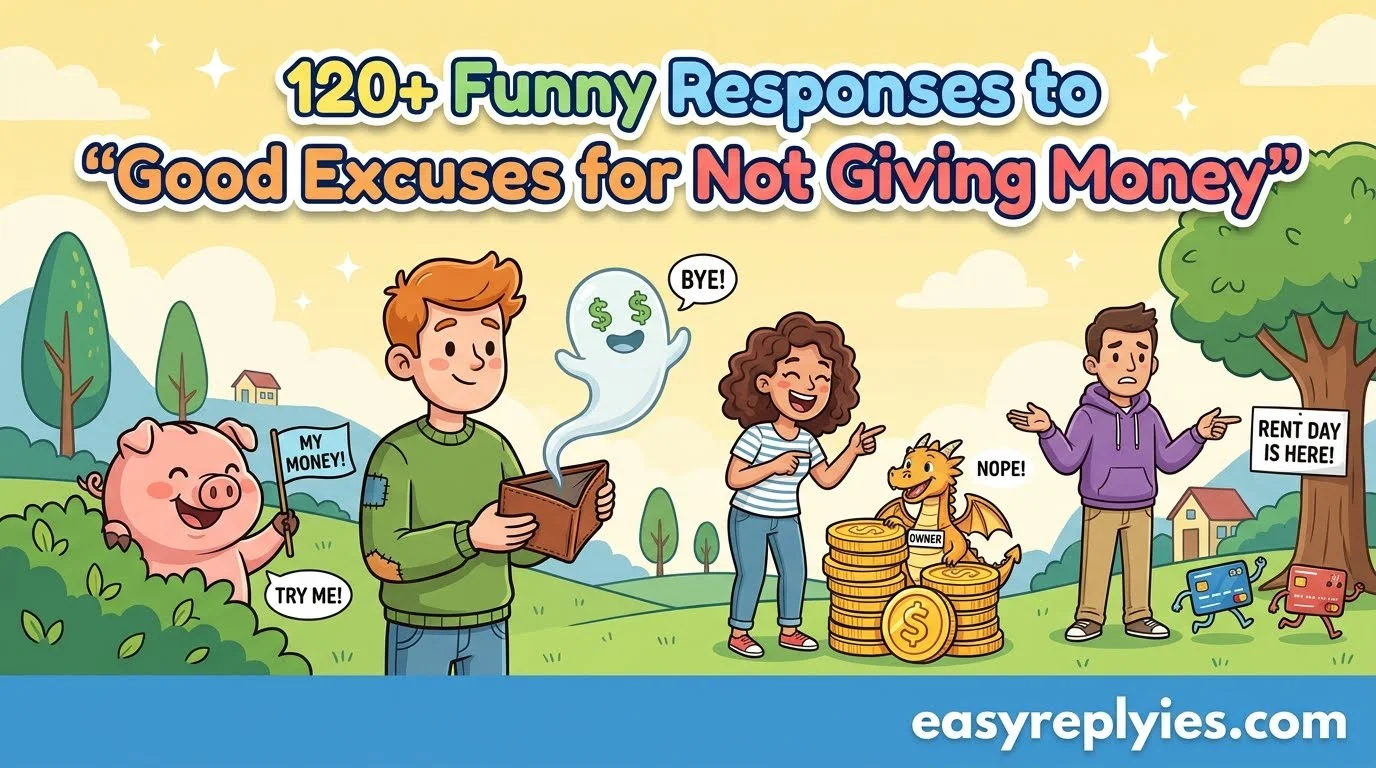
Sometimes, saying no to a money request feels awkward, especially when a friend or family member needs help. Funny Responses to “Good Excuses for Not Giving Money” can make saying no easier while keeping your relationships friendly. When your budget is tight, your bills are piling up, and your savings need protection, try a playful answer like, “My wallet is on vacation,” or “My bank account says I’m the one who needs financial assistance!” These funny excuses and clever comebacks help you explain your financial situation without hurting someone’s feelings.
A good response depends on the person asking, your relationship, and the situation. You might use short texts, witty replies, polite excuses, or humorous answers to make your refusal sound natural. For example, say, “My money already has plans with my bills,” or “I’d lend you some, but my budget is currently accepting donations!” These playful responses work well with close friends, siblings, coworkers, and acquaintances who understand your sense of humor. However, humor should never become insulting. Keep your tone friendly, show empathy, and choose words that make your financial boundaries clear without creating unnecessary conflict.
Your personal finances, unexpected expenses, debt, savings, and financial responsibilities all matter when someone asks for money. If you cannot lend money or contribute financially, be honest about your circumstances. You can politely decline, offer practical advice, or suggest alternatives to lending money without making false promises. Responsible spending, financial planning, and clear boundaries help protect your financial well-being while maintaining healthy relationships. Whether you face social pressure, awkward discussions, or repeated requests for financial help, a little humor combined with honesty, kindness, and confidence can make the conversation easier.
Funny Excuses When Your Wallet Is Empty
When you genuinely do not have spare cash, there is no need to invent an elaborate story. A little humor can communicate the truth without making the conversation uncomfortable.
Meaning
This type of response says, “I would help if I could, but my finances are not cooperating.” Because the joke is aimed at your own empty wallet, it usually feels less confrontational than making fun of the person asking.
Tone
Funny, casual, self-deprecating.
Example
Friend: Can you lend me some money until Friday?
You: I would, but my wallet currently has the financial stability of a paper airplane.
Best Use
Use it with friends, siblings, or people who appreciate casual humor.
When You Are Saving for Something
If you have money but it is already committed to a specific goal, you can make that commitment part of the joke.
Meaning
It explains that your available money already has a destination. You are not necessarily refusing because you do not care; you simply do not want to derail your own plans.
Tone
Playful, honest, confident.
Example
Friend: Come on, just lend me $50.
You: I can’t. That $50 already has a reservation for something I actually planned for.
Best Use
Good for casual conversations when you want to avoid discussing the details of your budget.
The “My Bank Account Said No” Excuse
Sometimes your bank balance can take the blame for you.
Meaning
This response turns your financial boundary into a humorous conversation between you and your bank account.
Tone
Funny, casual, slightly dramatic.
Example
Cousin: Can you send me some money?
You: I asked my bank account. It laughed and then stopped replying.
Best Use
Excellent for texting friends or family.
When You Want a Ridiculously Dramatic Excuse
A deliberately exaggerated excuse can work when everyone involved understands that you are joking.
Meaning
Instead of giving a serious financial explanation, you make the refusal absurdly dramatic.
Tone
Goofy, theatrical, playful.
Example
Friend: Why can’t you lend me $20?
You: Because I’m currently fighting for survival against three unpaid bills and one suspiciously expensive sandwich.
Best Use
Use this with people who enjoy exaggerated humor. Avoid it if they are genuinely stressed about money.
A Funny “I’m Broke” Response
You can say you are broke without making the conversation feel gloomy.
Meaning
It communicates a straightforward financial boundary while adding enough humor to keep things relaxed.
Tone
Funny, casual, direct.
Example
Friend: You got any extra cash?
You: Extra cash? I’m still looking for the regular cash.
Best Use
Great for quick conversations and text messages.
When Every Dollar Already Has a Job
Sometimes the issue is not being completely broke. Your money is simply allocated to necessities.
Meaning
This response tells the other person that your current budget has no room for lending.
Tone
Clever, practical, friendly.
Example
Friend: Can’t you spare a little?
You: Unfortunately, every dollar I have is employed. They’re all working overtime.
Best Use
Useful when you want to decline without explaining your entire budget.
Funny Responses When You Do Not Want to Explain Yourself
You do not owe everyone a detailed financial explanation. A humorous one-liner can close the subject.
Meaning
It establishes a boundary without inviting a long debate about why you cannot give or lend money.
Tone
Confident, lighthearted, slightly cheeky.
Example
Friend: Why not?
You: Because my financial department has rejected the proposal.
Best Use
Works particularly well when someone keeps asking for an explanation.
When You Are Trying to Save Money
If you are deliberately cutting spending, make that your punchline.
Meaning
It communicates that you are currently prioritizing saving rather than lending.
Tone
Funny, responsible, casual.
Example
Friend: Can you help me out with some cash?
You: I’m in my saving era. My wallet and I are trying to build a future together.
Best Use
Good for friends who already know you are trying to spend less.
A Clever “Ask My Accountant” Excuse
You can make an ordinary refusal sound hilariously official.
Meaning
The joke pretends that lending a small amount requires a serious financial review.
Tone
Clever, sarcastic, playful.
Example
Friend: Can I borrow $30?
You: I’ll have to consult my accountant, my budget, and the emotional support calculator.
Best Use
Best among friends and casual acquaintances who understand exaggerated humor.
Funny Responses When You Just Got Paid
Getting paid does not automatically mean you have money available to give away.
Meaning
It reminds the person that incoming money may already be committed to bills and necessities.
Tone
Playful, relatable, honest.
Example
Friend: You just got paid, right?
You: Yes, and my bills were waiting at the door with a welcome committee.
Best Use
Ideal for texting friends or relatives who assume payday means instant extra cash.
When Someone Says, “It’s Only a Little Money”
That phrase can be frustrating when repeated requests add up.
Meaning
This response humorously points out that “a little” still matters when your own budget is limited.
Tone
Witty, confident, mildly sarcastic.
Example
Friend: It’s only $10.
You: That’s what my budget said about the last $10 too. Look how that turned out.
Best Use
Use it when you want to push back without becoming overly serious.
Funny Excuses for Not Lending Money to a Friend
Money can complicate friendships, so humor can soften a clear refusal.
Meaning
It communicates that you prefer not to mix your friendship with lending money.
Tone
Friendly, humorous, boundary-setting.
Example
Friend: Can I borrow some money?
You: I value our friendship too much to introduce money into this beautiful disaster.
Best Use
Helpful when you want to preserve the friendship while making your boundary clear
When You Have Money but Do Not Want to Lend It
You do not have to claim that you are broke if you simply do not want to lend money.
Meaning
This approach keeps the focus on your personal boundary rather than inventing a false excuse.
Tone
Confident, playful, honest.
Example
Friend: You have some money. Why can’t you lend me any?
You: Correct. And I’m planning to keep our friendship wonderfully free of financial paperwork.
Best Use
Appropriate when you want to be honest without sounding harsh.
Funny Text Responses to “Can You Send Me Money?”
Texting gives you room for a quick one-liner that gets the point across.
Meaning
These responses are designed to be short enough for casual messaging while still making your answer clear.
Tone
Short, funny, casual.
Example
Friend: Can you send me $20?
You: Absolutely. Please send me $40 first so I can emotionally prepare.
Best Use
Best for friends who already understand your sense of humor.
Read More:120 Funny Ways to Tell Someone to Mind Their Own Business
When You Want a Polite but Funny Refusal
Not every money request should receive a savage comeback. Sometimes you want to say no while keeping things warm.
Meaning
This style combines a clear refusal with a small joke, making the answer less stiff.
Tone
Polite, friendly, humorous.
Example
Friend: Could you lend me some money?
You: I’d love to help, but my budget is currently accepting applications for donations itself.
Best Use
Useful when you want to remain considerate without agreeing to give money.
Funny Responses for Repeated Money Requests
Repeated requests deserve a slightly firmer boundary, even if you keep the wording playful.
Meaning
This tells the person that you have noticed the pattern and are not planning to keep entertaining the requests.
Tone
Funny, firm, confident.
Example
Friend: Can you lend me some money again?
You: At this point, I think you’re confusing me with a bank that has feelings.
Best Use
Works with close friends or relatives when repeated requests have become a pattern.
A “My Money Has Gone Missing” Joke
Use imaginary mystery when you want something silly rather than confrontational.
Meaning
It gives a humorous explanation for why you cannot contribute without launching into financial details.
Tone
Goofy, playful, casual.
Example
Friend: Do you have $20?
You: I did. Then my expenses formed a search party and found it.
Best Use
Great for casual texting and social conversations.
Funny Responses When You Have Bills to Pay
Bills are one of the easiest ways to explain why spare money is not actually spare.
Meaning
The response makes it clear that your money is already committed to essential expenses.
Tone
Relatable, funny, straightforward.
Example
Friend: Can you help me out this month?
You: I’d love to, but my bills have already claimed diplomatic immunity over my paycheck.
Best Use
Good for friends and family who understand your financial situation.
Sarcastic Responses for Someone Who Assumes You Have Unlimited Money
A little sarcasm can be useful when someone treats your wallet like an endless resource.
Meaning
It challenges the assumption that you are always available to provide money.
Tone
Sarcastic, confident, playful.
Example
Friend: Just pay for it.
You: Of course. My secret unlimited-money account should be activated any minute now.
Best Use
Use only when the relationship can handle sarcasm. With someone sensitive or genuinely struggling, choose a gentler response.
Funny Ways to Say “Not This Time”
Sometimes you want to decline without saying too much.
Meaning
It gives a clear but relatively soft refusal while keeping the atmosphere relaxed.
Tone
Friendly, casual, non-confrontational.
Example
Friend: Can you spot me this time?
You: Not this time. My wallet has entered its quiet, reflective phase.
Best Use
Useful for casual requests where you do not need to explain further.
When You Want to Blame Your Budget
Your budget can become the imaginary bad guy.
Meaning
This shifts the conversation away from the person asking and toward your financial limits.
Tone
Funny, light, relatable.
Example
Friend: Why can’t you help me with this?
You: I’d blame myself, but my budget has already taken full responsibility.
Best Use
Works well with friends and casual acquaintances.
Funny Responses That Sound Like a Formal Rejection
Pretending your refusal went through an official approval process can make a simple “no” more entertaining.
Meaning
It creates a playful sense of bureaucracy around your decision.
Tone
Dry humor, clever, confident.
Example
Friend: Can I borrow $50?
You: Your request has been reviewed, discussed, and rejected by the Department of Me.
Best Use
Perfect for humorous text conversations.
Funny Responses When You Want to Help in Another Way
Sometimes you cannot give money but can offer another form of support.
Meaning
This approach separates “I cannot give you money” from “I do not want to help.” You can offer practical assistance if it makes sense.
Tone
Kind, funny, supportive.
Example
Friend: Can you give me some money for dinner?
You: Cash isn’t happening, but I can help you figure out a cheaper dinner plan.
Best Use
Appropriate when you genuinely want to help but cannot provide financial assistance.
Short One-Liners for Saying No to Money Requests
If the conversation is casual, a short response is often better than a long explanation.
Meaning
These answers communicate your boundary quickly without creating unnecessary discussion.
Tone
Direct, funny, casual.
Example
Friend: Can you lend me $10?
You: My wallet says we’re taking a break.
Friend: Seriously?
You: Very seriously. We’re working through some things.
Best Use
Ideal for texts, DMs, and quick conversations.
Funny but Respectful Ways to Set a Money Boundary
Humor works best when it does not embarrass the person asking. If the request is sensitive, keep the joke gentle and make the boundary unmistakable.
Meaning
This style makes your position clear while protecting the relationship from unnecessary tension.
Tone
Respectful, confident, lightly humorous.
Example
Friend: I really need to borrow some money.
You: I understand, but I can’t lend money right now. My own budget is already giving me performance reviews.
Best Use
Use this when the person may genuinely be struggling and you want to decline without making light of their situation.
How to Choose the Right Funny Excuse for Not Giving Money
The funniest response is not necessarily the best response. The relationship, reason for the request, and emotional tone all matter.
If you are talking to a close friend, something exaggerated like “My wallet has entered witness protection” can land well. With a coworker, keep the humor restrained and avoid discussing personal finances in detail.
If someone is making a repeated request, a firmer response is usually better than another joke. And if the person is facing a serious financial problem, avoid making their situation the punchline.
A useful rule is simple: make yourself or your budget the joke, not the person asking for help. That keeps the humor from turning into humiliation.
What to Say If You Do Not Want to Give Money Without Lying
You do not actually need an excuse. Saying no honestly can be more sustainable than inventing a different story every time someone asks.
Meaning
The response communicates that you have made a personal decision not to lend or give money, without pretending that you are completely broke.
Tone
Honest, confident, respectful.
Example
Friend: Do you have some money you can lend me?
You: I do, but I don’t lend money. I hope you understand.
Best Use
This is particularly useful when you expect the person to ask again. A consistent boundary is easier to maintain than a collection of excuses.
Frequently Asked Questions
What is a funny response to someone asking for money?
A funny response can be as simple as, “I would help, but my wallet is currently accepting donations.” The safest humor usually targets your own budget rather than the person asking.
How can I politely refuse to give someone money?
Keep it brief and clear. You can say, “I’m sorry, but I’m not able to help financially right now.” If the relationship is casual, adding a light joke can make the refusal feel less formal.
Should I make up an excuse if I do not want to give money?
You do not have to. A direct boundary is often easier to maintain than an invented excuse, especially if the person regularly asks for money.
What is a funny text response when someone asks for money?
Try something short such as, “My bank account and I are currently working through some trust issues.” It works best when the conversation is already playful.
How do I say no to a friend without offending them?
Be clear without criticizing them. A response such as, “I love you, but my wallet is not participating in this adventure,” keeps the refusal focused on your financial boundary.
When should I avoid a funny money excuse?
Avoid humor when someone is discussing a serious emergency, significant financial hardship, or another sensitive situation. In those cases, a straightforward and respectful answer is usually more appropriate.
Conclusion
Good excuses for not giving money do not have to involve complicated stories. Often, the most effective approach is a short, honest boundary with a little humor. A joke about your wallet, budget, bills, or imaginary financial department can keep an awkward request from becoming an uncomfortable argument.
Choose your response based on the relationship and situation. A silly one-liner may be perfect for a close friend, while a calm and direct answer is better for a sensitive request or repeated borrowing. When in doubt, keep the humor aimed at your own circumstances—not the person asking—and make sure your “no” is still clear.





1 thought on “120 Funny Responses to “Good Excuses for Not Giving Money””